Skip to content

There is a common habit, which I’m almost certain that you’ve done before: you notice your gums bleeding when you brush, decide it is probably nothing, and carry on. Maybe you brush more gently to avoid it. Maybe you should avoid flossing altogether because that seems to make it worse.
What you should know is that bleeding gums are not a minor inconvenience. They are the earliest, most consistent warning signs of gum disease, and the reason so many patients miss the window for easy treatment is that the condition is almost entirely painless until significant damage has already occurred.
Periodontal disease is usually painless, especially in the early stages. You do not feel it progressing. You just eventually notice that your gums look different, your teeth feel loose, or a dentist tells you during a routine visit that you have pockets forming around your teeth that were not there before.
This article breaks down what gum disease actually is, every sign worth paying attention to, how it progresses if ignored, its connection to your overall health, and how it is treated at each stage.
What Is Gum Disease?
Gum disease, clinically known as periodontal disease, is an infection of the tissues that support your teeth. It begins when plaque is not adequately removed through brushing and flossing. With time, plaque can spread and grow below the gum line. When it hardens into tartar, it can no longer be removed by brushing alone and begins to irritate the gum tissue from beneath the surface.
This growth then triggers your body’s immune response, which causes inflammation. After a while, this inflammation damages the gums, the periodontal ligament connecting teeth to bone, and ultimately the jawbone itself. Once bone loss occurs, it cannot be fully reversed (O.T. Law). Gum disease is not curable because once you lose structural support around your teeth, you do not usually get all of it back. However, periodontal treatment can reduce infection and rebuild your bone and tissue to some degree.
This is the central reason why catching gum disease early is so much better than treating it late. The difference between the two is not just a matter of convenience; it is the difference between a reversible condition and a permanent one.
Signs of Gum Disease You Are Likely Ignoring
Most of these signs appear gradually and individually, which is exactly why they get dismissed. Taken together, they tell a clear story.
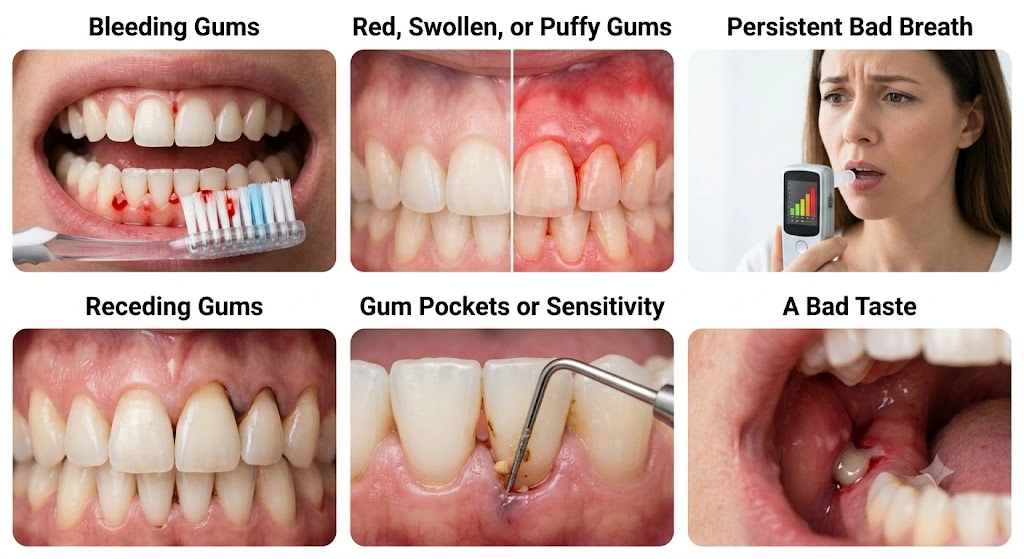
Bleeding gums when brushing or eating
This is the sign patients most consistently explain away. A little blood when brushing is not normal. Healthy gums do not bleed. Bleeding while brushing, flossing, or eating hard food is one of the primary warning signs of gum disease. The bleeding happens because inflamed gum tissue is fragile and engorged with blood as part of the body’s response to bacterial infection. Brushing more gently does not resolve the underlying problem; it only reduces the visible evidence of it.
Red, swollen, or puffy gums
Gingivitis symptoms include swollen, puffy gums, reddening of gums, gums that bleed easily, tenderness, and bad breath. Gums that appear darker red, swollen, or feel soft to the touch are exhibiting the classic signs of early inflammation. Many patients mistake this for a normal variation in their gum appearance and never raise it with a dentist.
Persistent bad breath
Chronic bad breath that does not respond to brushing, tongue scraping, or mouthwash is a common and frequently underestimated sign of gum disease. Chronic bad breath is caused by bacterial buildup. The bacteria colonising the space between your teeth and gums, and accumulating in the pockets forming below the gum line, produce volatile sulphur compounds that no amount of surface cleaning can eliminate. If your breath is reliably poor despite good oral hygiene, something below the gum line needs to be assessed.
Receding gums
Gums that are receding or pulling away from the teeth cause the teeth to look longer than before. This recession happens as the inflamed tissue pulls back from the teeth in response to the infection spreading below the gum line. Many patients notice this as teeth that seem to have grown longer, or as increased sensitivity along the tooth root, which is now exposed to temperature and pressure it was previously protected from. Root sensitivity in a patient who did not previously have it warrants gum assessment, not just a sensitivity toothpaste.
Gum pockets or sensitivity when eating certain foods
Some patients describe a new sensitivity along the gum line, or a sensation of food getting trapped between the gum and tooth in areas it did not before. This is often a sign that pockets, gaps between the gum and the tooth surface, are forming as the gum tissue detaches. These pockets trap bacteria and food, accelerating the damage.
A bad taste in the mouth
A persistent salty or unpleasant taste, particularly around specific teeth, can indicate pus or bacterial discharge from infected gum tissue. This sometimes accompanies a small raised bump on the gum, which is a fistula draining infection. It is not a taste issue that mouthwash will resolve; it is a sign of active infection.
The Stages of Gum Disease
Understanding how gum disease progresses explains why the same condition can look completely different from one patient to the next.
Stage 1: Gingivitis
Gingivitis is stage 1 gum disease and the mildest, most common form. It involves inflammation of the gums without permanent damage to bone or connective tissue. Common signs are red or swollen gums, bleeding with brushing or flossing, and bad breath. It is typically reversible with improved oral hygiene and professional cleanings.
This is the only stage where the condition can be fully reversed. The bone is intact, no permanent structural damage has occurred, and the right combination of professional cleaning and consistent home care can restore the gums to full health. The problem is that most patients do not act at this stage because the symptoms feel too minor to justify a clinic visit.
Stage 2: Early Periodontitis
If gingivitis is not treated, it can progress into early periodontitis, where gum inflammation damages the bone and soft tissues supporting teeth. Periodontal pockets form as the gums pull away from the teeth, creating spaces for bacteria to thrive. Symptoms include persistent gum bleeding and mild bone loss.
At this stage, the damage is no longer fully reversible, but it is manageable. Treatment here can halt the progression and preserve most of the supporting structure.
Stage 3: Moderate Periodontitis
In moderate periodontitis, the infection deepens, causing increased bone loss and gum recession. Teeth may begin to loosen due to weakened support, and bad breath often becomes a noticeable issue. Treatment typically includes scaling and root planing to clean beneath the gum line and reduce bacterial buildup. Antibiotic therapy may also be prescribed to help control the infection and support healing.
Stage 4: Advanced Periodontitis
The most severe stage, advanced periodontitis, results in significant destruction of the gums, bone, and supporting tissues. Teeth may become extremely loose or fall out; symptoms like pus around the gums, severe bad breath, and significant discomfort are common. Advanced gum disease treatment often involves oral DNA and modular periodontal treatment to clean deep pockets or bone grafts to rebuild lost tissue.
Patients who reach this stage face the most complex and expensive treatment pathway, often including surgical intervention and, in some cases, tooth loss that then requires implants or dentures. None of this is inevitable if earlier signs are acted upon.
Common Risks That Expose You to Dental Gum Disease
Certain patients are at higher risk of developing gum disease and progressing through its stages faster than others.
Smoking is one of the most significant risk factors. It reduces blood flow to the gums, impairs the immune response, and makes gum tissue less capable of healing after treatment. Smokers in Lagos who also have a high-sugar diet and irregular dental visits are at substantially elevated risk.
Periodontal disease is more common in individuals with poor oral hygiene and other cardiovascular disease risk factors, such as high blood pressure, overweight or obesity, diabetes, and smoking. The prevalence of periodontal disease is also higher among men, older adults, individuals with low physical activity, and people affected by adverse social determinants of health, such as lower socioeconomic status, food insecurity, and lack of access to dental care.
Other risk factors include hormonal changes during pregnancy, which can intensify gum inflammation even in patients with previously healthy gums, certain medications that reduce saliva flow or cause gum tissue changes, and genetics. There are many different types of oral bacteria. Some people are simply more prone to having the kind that causes gum disease. This means that even patients with reasonably good oral hygiene can develop periodontitis if they carry a higher-risk bacterial profile or a genetic predisposition, making regular professional check-ups important regardless of how clean their teeth appear.
Frequently Asked Questions
Gingivitis, the earliest stage, can resolve with improved oral hygiene and professional cleaning. Once it progresses to periodontitis, the damage to bone and connective tissue is permanent and will not reverse without clinical treatment. It will also continue to progress if left alone.
Hormonal changes during pregnancy increase sensitivity and inflammation in gum tissue, which can cause bleeding even in patients with previously healthy gums.
Yes. Advanced periodontitis is one of the leading causes of tooth loss in adults globally. As the bone supporting the teeth is destroyed by infection, teeth lose their structural foundation and eventually become too loose to save. This is entirely preventable with early treatment
Where to Treat Gum Disease in Lagos
The signs are usually there well before gum disease becomes serious. A little bleeding here, slightly puffy gums there, breath that is harder to manage than it used to be. Most patients notice at least one of these things and wait to see if it resolves on its own.
It does not resolve on its own. It progresses.
If you are looking for where to treat gum disease in Lagos, Dr. Reach Dental Clinic in Yaba and Ikeja is a trusted option. We carry out comprehensive gum assessments as part of every routine check-up, so problems are caught and treated before they advance. If you have not had your gums assessed recently, or if any of the signs in this article sound familiar, book an appointment. Catching this early is always the better option.