Skip to content
Tartar is one of those dental problems that builds up quietly. No pain, no obvious warning, just a gradual accumulation on your teeth that brushing cannot touch. By the time most people notice it, it has already been there for a while.
If you have ever felt a rough or gritty texture on your teeth, noticed yellowish deposits near your gumline, or been told by a dentist that you need scaling, this article will help you understand exactly what is happening and what to do about it.
So, What Is Tartar, Exactly?

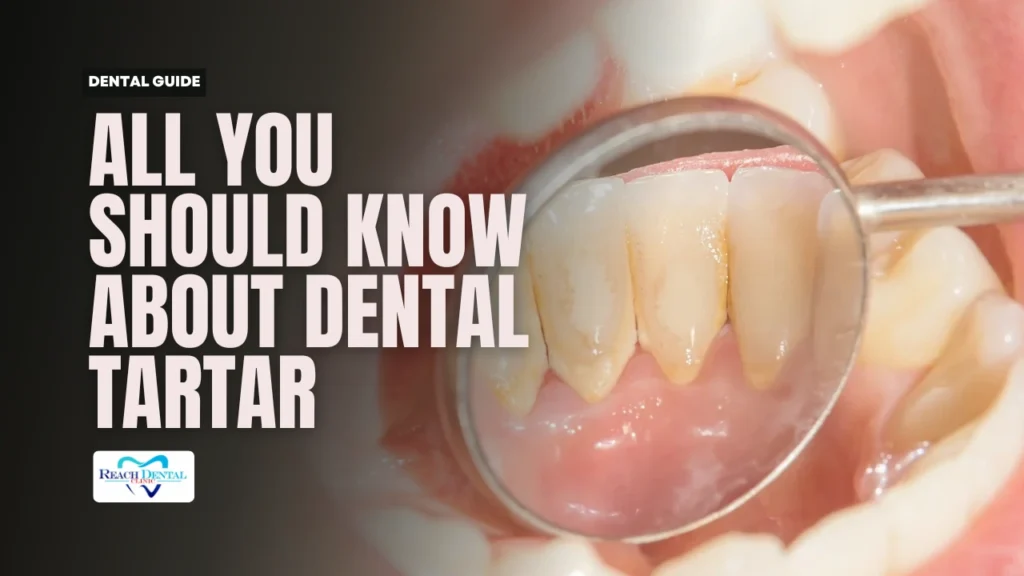
Tartar, also called “dental calculus”, is hardened plaque. It forms when plaque, the soft bacterial film that coats your teeth daily, is not removed thoroughly and is allowed to mineralise over time. Once it hardens, it bonds to the tooth surface and cannot be brushed or rinsed away.
It typically appears just above the gumline, below the gumline where it is not visible, and commonly behind the lower front teeth. In terms of appearance, tartar ranges from yellow to brown to a dark grey, depending on how long it has been there and whether dietary habits like tea, coffee, or smoking have stained it further. Running your tongue along the back of your lower front teeth and feeling a rough, hard ridge is often the first sign.
Plaque vs Tartar: What Is the Difference?
These two terms are often used interchangeably, but they are not the same thing, and understanding the difference matters for how you take care of your teeth.
What Plaque Is
Plaque is a soft, sticky, colourless film of bacteria that forms on your teeth throughout the day. Every time you eat, especially sugary or starchy food, bacteria in your mouth feed on those food particles and produce acids. Plaque is the byproduct of that process. It is constantly forming, which is why brushing twice daily is not just a recommendation but a necessity.
What Tartar Is
Tartar is what plaque becomes when it is not removed. Within 24 to 72 hours, plaque that remains on the tooth surface begins to absorb minerals from your saliva and hardens into tartar. At that point, no amount of brushing, flossing, or rinsing will remove it. Only a dentist or dental hygienist using professional instruments can take it off
People often assume that brushing well means they are fully protected. Brushing does remove plaque effectively when done correctly, but it cannot reach every surface, particularly between teeth and just below the gumline. Any plaque left in those areas hardens into tartar.
This is exactly why professional dental cleaning is not a luxury or an optional extra. It addresses what home care, no matter how consistent, simply cannot.
How Does Tartar Build Up?
There are a couple of things that build up tartar in your mouth, and knowing them is your first step in curbing them.
Inconsistent or Incorrect Brushing
Brushing quickly, skipping the gumline, or only cleaning the front visible teeth leaves plaque behind in the areas that matter most. Plaque left undisturbed at the gumline is exactly where tartar tends to accumulate first.
Not Flossing
The spaces between your teeth are areas your toothbrush cannot clean properly. Plaque builds up there and, without flossing to remove it, hardens into tartar that sits between teeth and under the gum. Many Lagos patients who present with significant tartar buildup are regular brushers who have simply never flossed consistently.
Diet High in Sugary and Starchy Foods
Sugar and refined starch feed the bacteria responsible for plaque production. A diet heavy in soft drinks, agege bread, biscuits, ogi, and sugary snacks creates the conditions for rapid plaque formation. This does not mean you cannot eat these foods, but it does mean that oral hygiene after eating them becomes more important.
Dry Mouth
Saliva plays a role in neutralising the acids produced by bacteria and washing away food particles. People who have dry mouth, whether from medication, mouth breathing, or other factors, tend to accumulate plaque faster because that natural protection is reduced.
Irregular Dental Visits
This is probably the most significant factor in Lagos. For many residents, a dental visit only happens when there is pain. Tartar buildup causes no pain in its early stages, so it continues to grow undetected for months or even years. By the time symptoms appear, the buildup can be extensive and the associated gum problems already underway.
How Do You Know If You Have Dental Tartar?
Tartar does not always announce itself, but there are signs worth paying attention to. A yellow, brown, or greyish deposit near the gumline, particularly on the lower front teeth and the upper back molars, is often visible on close inspection. Running your tongue along the back surface of your lower front teeth and feeling a hard, rough ledge is a reliable indicator.
Persistent bad breath that does not resolve with brushing is another common sign. Tartar harbours bacteria, and those bacteria produce sulphur compounds that cause bad breath regardless of how often you brush. Bleeding gums when you brush is also frequently linked to tartar. The buildup irritates the gum tissue, causing inflammation, and inflamed gums bleed easily. Many Lagos patients who report bleeding gums assume it is normal or that they are brushing too hard, when the actual cause is tartar sitting at the gumline.
What Happens If Tartar Is Left Untreated?
Gum Disease
Tartar is the primary driver of gum disease. The bacteria in tartar irritate and infect the gum tissue, causing gingivitis, which presents as red, swollen, bleeding gums. Gingivitis is reversible with professional cleaning. If left unaddressed, it progresses to periodontitis, a more serious infection that affects the deeper structures supporting the teeth.
As dental tartar advances, the infection destroys the soft tissue and bone that hold teeth in place. Gums pull back, roots become exposed, and the bone level drops. This process is largely irreversible. Treatment at this stage can stop further progression but cannot fully restore what has been lost.
Tooth Decay
Tartar creates a rough surface that makes it easier for more plaque to accumulate and stick. The bacteria in that environment continuously produce acids that attack tooth enamel, leading to cavities. Tartar near and below the gumline also creates conditions for decay in areas that are harder to detect early.
Tooth Loss
Severe, long-standing tartar buildup combined with untreated gum disease is one of the leading causes of adult tooth loss. The teeth do not decay and fall out. They become loose as the supporting bone is gradually destroyed, until they can no longer be saved. This is not an inevitable outcome, but it is the outcome of consistently ignoring the problem over many years. You can see the video on how a patient lost his tooth during deep cleaning.
How Dentists Remove Tartar: What Scaling Involves
The procedure used to remove tartar is called scaling, and it is more straightforward than most patients expect. Your dentist or hygienist uses either an ultrasonic scaler, which vibrates at high frequency to break up the tartar deposits, or hand instruments called scalers and curettes, or a combination of both. The sensation is pressure and vibration rather than pain. For patients with significant buildup below the gumline, a local anaesthetic can be used to ensure comfort throughout.
When tartar has formed below the gumline and into the pockets between the gum and tooth root, a more thorough version called root planing is carried out. This smooths the root surface to remove deeply embedded calculus and create a clean surface that makes it harder for bacteria to reattach. After scaling and root planing, the teeth are polished to remove surface staining and leave the enamel smooth. Polishing does not whiten teeth or change their natural shade. It removes surface discolouration and reduces the texture that allows plaque to cling.
A routine scaling and polishing appointment for mild to moderate tartar buildup typically takes between 30 and 60 minutes. Cases involving more extensive buildup or deep cleaning below the gumline may require a longer appointment or multiple visits. You can book a consultation with Dr. Rerach Dental Clinic today, to remove the calculus in your mouth and make it fresh again.
How Much Does Tartar Removal Cost in Lagos?
The cost of removng dental tartar ad calculus in Lagos starts from ₦60,000. The price can go up to about ₦300,000, or more than, depending on how severe your case is.
Often times, what consistently drives the cost up is delay. Patients who come in regularly for routine cleaning tend to have straightforward, quick appointments. Patients who have not had a professional clean in several years often require more time, more work, and sometimes multiple sessions. Treating the problem earlier is almost always less expensive than treating the consequences later.
Dr. Reach Dental Clinic provides professional scaling and polishing in Yaba, Lagos. A consultation will give you a clear picture of your current tartar situation and the treatment required.
Can You Remove Tartar at Home?
The direct answer is no, not safely. Once plaque has hardened into tartar, it is mineralised and bonded to the tooth surface. No toothpaste, however abrasive, and no rinse, however strong, can dissolve or scrape it off.
There are DIY tartar scraping tools available online and in some Lagos markets, sold as a way to clean your teeth at home. These are genuinely risky. Without clinical training and proper lighting, it is very easy to scratch the enamel surface, cut the gum tissue, or push tartar further below the gumline where it causes more damage. The instruments used in a dental clinic are designed for specific angles and controlled pressure. Attempting to replicate that at home causes more harm than the tartar itself.
What home care can do is prevent plaque from hardening into tartar in the first place. Brushing correctly twice in a day, flossing daily, and using an antiseptic mouthwash creates an environment where plaque is regularly disrupted before it has a chance to mineralise. That is where the real prevention happens. But for tartar that is already there, professional removal is the only safe and effective option.
Get Your Dental Tartar Cleaned at Dr. Reach Dental Clinic
Tartar is not a cosmetic issue. It is a clinical one that, if ignored, leads to gum disease, decay, and eventual tooth loss. The reassuring part is that it is entirely manageable with the right combination of home care and professional cleaning.
Dr. Reach Dental Clinic has locations in Yaba, making professional dental care accessible to people across the mainland and island. If it has been a while since your last cleaning, or if you have noticed any of the signs described in this article, a consultation is the right next step.
If you like this article, these are other great reads:
What to Do After Tooth Extraction: Your Recovery Guide (Lagos Edition)
What Are the Benefits of Scaling and Polishing Teeth?
Teeth Scaling and Polishing in Lagos: The Ultimate 2026 Guide
Teeth Scaling and Polishing Side Effects
All You Should Know About Tooth Extraction in 2026