Skip to content
Most people in Lagos who develop oral cancer do not find out until it has already progressed to a stage where treatment becomes complicated, expensive, and uncertain. That is not because oral cancer is rare. It is because the early signs are easy to dismiss, and awareness of the real causes remains low.
This guide breaks down exactly what causes oral cancer, who is most at risk, and which warning signs should prompt you to see a dentist before waiting another week.

What Is Oral Cancer, and why should Lagosians pay attention?
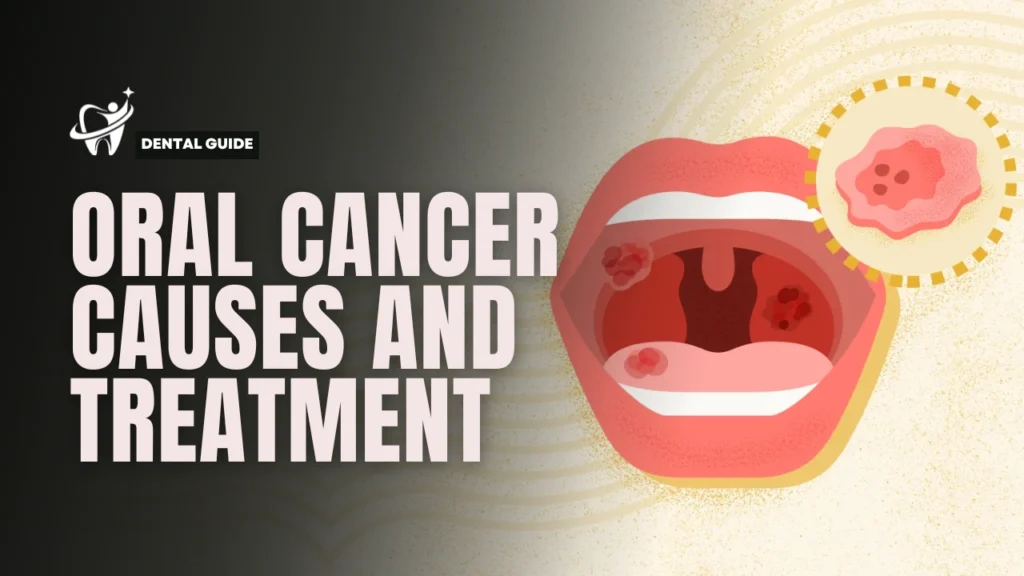
Oral cancer refers to cancer that develops in any part of the mouth. This includes the lips, tongue, inner cheeks, gums, the floor of the mouth, and the roof of the mouth. It can also affect the throat, specifically the area at the back of the mouth known as the oropharynx.
Like most cancers, oral cancer is far more treatable in its early stages. The problem is that it rarely causes pain at the beginning. A small white patch or a minor sore is easy to ignore. Especially when life in Lagos keeps you moving from meetings to traffic to family obligations with no time to pause.
Across sub-Saharan Africa, oral cancer is frequently diagnosed late because patients wait months before seeking professional attention, often assuming the sore will heal on its own or treating it at home with vitamins and salt water. By the time a dentist sees it, the window for simpler treatment has often closed.
Understanding what causes oral cancer is the first and most practical step toward protecting yourself.
The Main Causes of Oral Cancer
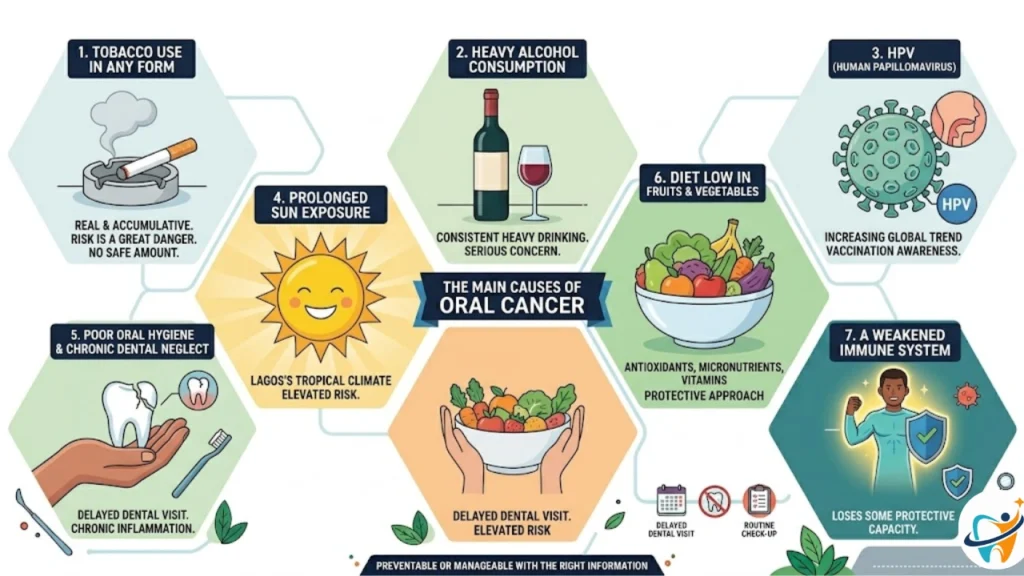
Oral cancer does not develop randomly. In most cases, there are identifiable risk factors at play, many of which are preventable or manageable with the right information.
1. Tobacco Use in Any Form
Tobacco remains the top and single most well-documented cause of oral cancer globally. And Nigeria is no exception. Whether you smoke cigarettes, cigars, or a pipe, or you use chewing tobacco, tobacco snuff, or any smokeless tobacco product, the risk is real and accumulative.
The chemicals in tobacco, particularly nitrosamines and polycyclic aromatic hydrocarbons, directly damage the DNA of cells lining the mouth and throat. Over time, this damage builds up and can trigger abnormal cell growth.
Some people now consider smokeless tobacco as a safer alternative to cigarettes. But the evidence does not support that view. Placing tobacco against the inner cheek or gum repeatedly exposes that tissue to concentrated carcinogens. There is no safe amount of tobacco use when it comes to oral cancer risk.
2. Heavy Alcohol Consumption
After Tobacco, it’s its sister, Alcohol, that increases the risk of oral cancer. But when combined with tobacco use, the two together create a risk that is significantly higher than either one alone.
Alcohol weakens the protective mucosal lining of the mouth, making it easier for carcinogens to penetrate the cells beneath the surface. It also affects the body’s ability to repair DNA damage and suppresses immune responses that would otherwise identify and destroy abnormal cells early.
For many working professionals and social circles in Lagos, drinking is a regular weekend activity. Occasional, moderate drinking is generally considered a lower risk. However, consistent heavy drinking over months and years, particularly alongside tobacco use, is a serious concern.
3. HPV (Human Papillomavirus)
Human Papillomavirus, commonly known as HPV, is a group of viruses spread through skin-to-skin contact, including oral contact. Certain strains of HPV, particularly HPV-16, have been strongly linked to oropharyngeal cancers, which affect the back of the throat, base of the tongue, and tonsils.
HPV-related oral cancers have been increasing globally over the past two decades. Awareness of this connection remains low in Nigeria, which makes education on this topic especially important.
The encouraging part is that HPV vaccination exists and is highly effective at preventing infection with the high-risk strains. Having an open conversation with your doctor or dentist about HPV and oral health is worth doing.
4. Prolonged Sun Exposure
This cause is often overlooked, but it is particularly relevant in Lagos given the city’s tropical climate and year-round sun intensity.
Cancer of the lower lip is strongly associated with long-term, unprotected sun exposure. Ultraviolet radiation from the sun damages the cells on the lip’s surface over time, in a similar way to how skin cancer develops on other exposed areas of the body.
Outdoor workers, market traders, construction workers, and others who spend extended hours under direct sunlight are at elevated risk, especially when lip protection is not part of their routine.
5. Poor Oral Hygiene and Chronic Dental Neglect
Poor oral habits do not directly cause oral cancer the way tobacco does. What it does is to create conditions that increase vulnerability. Chronic inflammation in the mouth, untreated infections, badly broken teeth with sharp edges, and ill-fitting dentures that rub repeatedly against the same area of tissue can all cause persistent irritation.
Over time, ongoing irritation and inflammation in the same spot can lead to cellular changes. This is not an overnight process, but it is a real pathway, particularly when combined with other risk factors.
Many Lagos residents avoid dental visits due to cost concerns, time constraints with demanding work schedules, or anxiety about dental procedures. A routine check-up that could catch early changes is then delayed for months or years.
6. Diet Low in Fruits and Vegetables
This is something Nigerians do not take seriously. Fruits and vegetables contain antioxidants and micronutrients that help protect cells from damage. They also support the body’s natural repair mechanisms. A diet consistently low in these foods reduces that protection over time.
Research conducted by Rodríguez-Molinero et. al. has shown an association between diets low in vitamins A, C, and E and increased oral cancer risk. This does not mean that eating fruits and vegetables will cancel out other major risk factors like heavy smoking, but a nutritious diet does form part of an overall protective approach to health.
7. A Weakened Immune System
Lastly, your immune system. The immune system plays a continuous role in identifying and eliminating abnormal cells before they develop into cancer. When the immune system is compromised, whether due to an infection, long-term immunosuppressive medication, or other medical conditions, the body loses some of that protective capacity.
People living with HIV in particular face a higher risk of developing oral lesions that, if left unmonitored, can progress to malignancy. Regular dental and medical monitoring is especially important in this group.
Who Is Most at Risk? High-Risk Groups in Lagos
While oral cancer can affect anyone, certain groups carry a higher statistical risk:
- Men over 40, who remain the most commonly affected demographic globally.
- Heavy smokers and people who use any form of tobacco regularly.
- Regular, heavy alcohol consumers, particularly those who also smoke.
- People with oral lesions or sores that have persisted for more than three weeks without healing.
- Outdoor workers and traders in Lagos spend long hours under direct sunlight without lip protection.
- Individuals who have had no routine dental care in several years.
- People with a known HPV history or compromised immune systems.
- Those with a family history of oral or head and neck cancers.
If you fall into more than one of these categories, the case for getting a routine oral cancer screening becomes much stronger. Book a consultation with us today!
Frequently Asked Questions About Oral Cancer Causes in Lagos
Tobacco use is the most frequently identified cause. This includes cigarettes, cigars, pipes, chewing tobacco, and tobacco snuff. Heavy alcohol consumption is the second major factor, and the combination of both significantly multiplies the risk.
Alcohol does not directly cause cancer cells to form, but it creates conditions that make it much easier for cancer to develop. Alcohol dissolves the protective mucosal lining of the mouth, making the underlying tissue more permeable to carcinogens. It also interferes with how the body metabolises and detoxifies harmful substances and impairs the immune system’s ability to detect and destroy abnormal cells.
Yes. A trained dentist routinely examines the soft tissues of the mouth as part of a standard checkup. This is one of the most important reasons to attend dental appointments regularly, even when you have no obvious dental pain.
You should take it seriously enough to see a dentist. Most mouth sores are harmless and heal within ten to fourteen days. One that persists beyond three weeks without improvement is outside the normal range and deserves a professional evaluation. It may turn out to be nothing serious, but it is not the kind of thing to keep treating at home with vitamins while weeks pass. A dental appointment will either put your mind at rest or ensure you get the right care at the right time.
The cost of an oral cancer screening at a private dental clinic in Lagos varies depending on the clinic and what the examination involves. It is generally an affordable procedure relative to the cost of treating undetected cancer at a later stage. Contact Dr. Reach Dental Clinic directly to get current pricing for screening at the Yaba or Ikeja branches.
Book an Oral Cancer Screening at Reach Dental Clinic, Lagos
Have you noticed any unusual sore, patch, or lump in your mouth? Or you simply want the peace of mind that comes with knowing your oral health is being properly monitored? An oral cancer screening is a straightforward and sensible step you must take.
At Dr. Reach Dental Clinic, we have experienced dentists at both the Yaba and Ikeja branches in Lagos. We’re equipped to carry out thorough oral examinations and advise you on any findings.
Early detection is not about fear. It is about being informed and in control of your health.
Visit www.reachdentalclinic.com/booking or call us to schedule your appointment today.