Skip to content
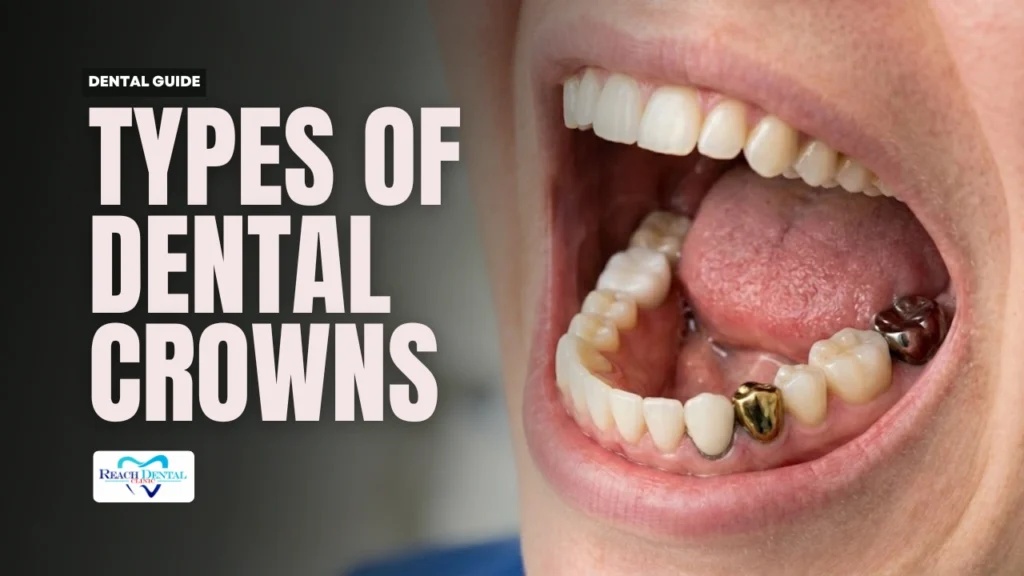
If your dentist has recommended a dental crown, one of the first questions that follows is usually about options. There are several types of dental crowns available, and the right choice depends on a couple of things. Such as the tooth’s location, your budget, aesthetic preferences, and the clinical situation.
This guide breaks down the main types of crowns. What each one offers, and what Lagos patients should consider when making a decision.
What Is a Dental Crown?
A dental crown is a tooth-shaped cap placed over a damaged, weakened, or treated tooth to restore its shape, strength, and appearance. It covers the entire visible portion of the tooth above the gumline.
Crowns are used in a range of situations. They are used after a root canal treatment to protect a tooth with a large tooth filling that has little natural structure remaining, to restore a cracked or broken tooth, or as the final visible component placed on top of a dental implant.
The type of crown recommended will depend on a combination of clinical and practical factors. Your dentist should walk you through the options relevant to your specific case.
There are six different types of dental crowns largely available in Lagos, in 2026:
- Porcelain Dental Crowns
- Zirconia Crowns
- Porcelain-Fused-to-Metal (PFM) Crowns
- Full Metal Crowns (Gold or Base Metal Alloys)
- Pressed Ceramic Crowns (E-max), and
- Temporary Crowns
Porcelain Dental Crowns (All-Ceramic)
Porcelain crowns, also called all-ceramic crowns, are the most aesthetically refined option available. They are made entirely from dental ceramic and are designed to closely match the colour, translucency, and appearance of natural teeth. When done well, they are virtually indistinguishable from the surrounding teeth.
They are the preferred choice for front teeth and any tooth in a visible position. Because they contain no metal, they do not produce the grey line at the gumline that can appear over time with older metal-based crowns.
The main consideration with all-ceramic crowns is that they are less resistant to heavy biting forces compared to metal-based options. For back teeth that bear a significant chewing load, your dentist may suggest a stronger alternative depending on your bite pattern.
In Lagos dental clinics, all-ceramic crowns are increasingly the most requested option, particularly among patients replacing front teeth or finalising implant restorations.
Zirconia Crowns
Zirconia crowns have become one of the most widely used crown types in modern dentistry, and for good reason. It is a ceramic material that combines the strength of metal with the aesthetic qualities of tooth-coloured porcelain.
Zirconia Crowns are strong enough for back teeth and natural-looking enough for front teeth. They are also biocompatible, meaning the gum tissue around them responds without irritation. They are also resistant to chipping and cracking, making them a long-term option.
For patients in Lagos who want a single crown type that works well across different positions in the mouth, zirconia is often the most practical recommendation. It works well in both aesthetic and functional zones and holds up well with proper care.
The cost of zirconia crowns is higher than that of some alternatives. But their durability and appearance make them a popular choice for patients.
Porcelain-Fused-to-Metal (PFM) Crowns
Another type of dental crown is porcelain-fused-to-metal (PFM) crowns. They have been used in dentistry for decades and remain a common option in many Lagos clinics. As the name suggests, they consist of a metal base with a porcelain layer on top. The metal provides strength, and the porcelain provides a tooth-coloured appearance.
They are a durable option and work well for both front and back teeth. The main drawback is the metal substructure. This can become a thin dark line at the gumline, particularly as gums recede naturally with age. Patients with high aesthetic expectations often consider the PFM crown.
PFM crowns are generally more affordable than full zirconia or all-ceramic options. This makes them a practical alternative for patients who need durability within budget. They remain a clinically reliable choice when placed and maintained correctly.
Full Metal Crowns (Gold or Base Metal Alloys)
Full metal crowns, including gold crowns and those made from other metal alloys, are the most durable option available. They withstand biting and chewing forces very well, rarely chip or fracture. They often require less removal of natural tooth structure during preparation compared to other crown types.
Their obvious limitation is appearance. A full metal crown is not tooth-coloured, which makes it visible on the front teeth. Gold crowns in particular have an impressive track record. They are gentle on opposing teeth and can last for many decades with proper care. Some patients request them for posterior teeth because of their longevity and reliability.
In terms of cost in Nigeria, gold crowns fluctuate with gold prices and import costs, so the pricing can vary. Base metal alloy crowns are generally more affordable while offering similar functional benefits.
Pressed Ceramic Crowns (E-max)
Another increasingly popular dental crown is the E-max. These types of crowns are a specific type of pressed ceramic crown made from lithium disilicate glass ceramic. The E-max crowns offer a high level of aesthetic quality combined with strength. This makes them a popular choice for anterior teeth and premolars.
They are particularly valued for their translucency. This mimics the way natural tooth enamel interacts with light. For replacing or restoring front teeth with the most natural appearance, E-max is one of the top-performing options.
Temporary Crowns
Lastly, the temporary crowns. This deserves a mention because most patients will wear one at some point during the crown placement. What do temporary crowns do? They are used while the permanent crown is being fabricated. Temporary crowns are often made with acrylic or composite resin.
They are not designed for long-term use. They basically protect the prepared tooth, maintain its appearance, and hold its position. It does all these while you wait for your permanent restoration. Patients are generally advised to avoid hard, sticky, or very chewy foods while wearing a temporary crown. And, of course, to attend the follow-up appointment to have the permanent crown fitted.
How to Choose the Right Crown Type
The decision is rarely made in isolation. In fact, as a practice at Dr Reach Dental Clinic, we bear the responsibility, as your dentist, to decide for you. Not because we want to deprive you of your will, but because of our experience. We will consider the location of the tooth and the amount of remaining natural tooth structure. We will also study your bite pattern and whether you grind your teeth. Now we can consider your aesthetic priorities and your budget.
For front teeth where appearance matters most, all-ceramic or zirconia crowns are the best fit. For back teeth where strength is the priority, metal or zirconia options perform well. And PFM crowns for patients who need a balance of aesthetics and affordability.
Grinding habits are worth discussing openly with your dentist. Patients who grind their teeth at night put significantly more stress on crowns. Some materials hold up better under that kind of pressure than others. So, open up when you are with your dentist. A night guard used alongside a crown can extend the life of the restoration considerably.
Cost is a real factor for many patients in Lagos, and there is no benefit in recommending a crown type. The reason is that your dentist makes the ultimate call. In Lagos, Nigeria, the cost of crowns, across its several types, is 150,000 – 300,000 Naira. We will have a proper look at the cost in a comprehensive article soon.
At Dr. Reach Dental Clinic, we discuss the realistic lifespan and cost implications of each option relative to your situation. Book a consultation with us today!
Frequently Asked Questions
With proper care and regular dental visits, crowns can last between 10 and 20 years or longer. Zirconia and gold crowns tend to have the longest track records for durability. The lifespan also depends on oral hygiene habits and diet.
No special routine is needed. Brush twice daily, floss around the crown, and attend regular dental check-ups. Note that the tooth beneath the crown can still develop decay at the margins. So consistent hygiene and professional monitoring matter.
The procedure is carried out under local anaesthesia. So the preparation itself is not painful. Some sensitivity or mild discomfort around the tooth is normal. It happens the days following placement and usually settles on its own.
This is uncommon but possible. It is usually due to cement failure or significant decay beneath the crown. If a crown comes loose or falls off, contact your dentist immediately. Keep the crown safe and avoid eating on that side until it is re-cemented or replaced.