Skip to content
Why do I need retainers? Am I supposed to do anything after my Clear Aligner long session? This was Chike when he finished his teeth straightening. We told him he’s supposed to install retainers, and his wide was wide open. Just like you, too, when you read that part. So, calm down, and let me explain why.
This article walks you through what retainers are, the different types available, how long you will realistically need to wear one, what happens when patients skip them, and the costs for that.

What Is a Retainer and Why Do You Need One?
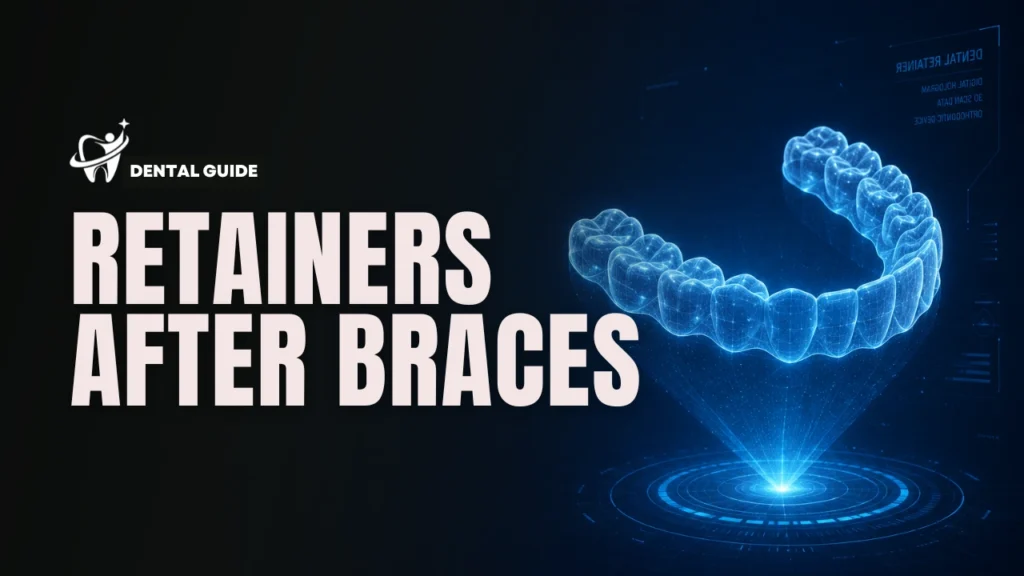
A retainer is a custom-made dental appliance worn after orthodontic treatment to keep your teeth in their corrected positions. After braces or Invisalign, your job is to maintain that result while your body catches up.
After you remove your braces, your teeth are essentially sitting in position without a firm anchor. Any force, including the natural pressure from chewing, speaking, or simply the tension of your surrounding tissues, can nudge them. And teeth have a strong tendency to drift back toward where they came from.
It takes approximately some months for the bone around your teeth to fully harden and stabilize in its new position. The ligaments take even longer to reorganize. During this window, your teeth are particularly vulnerable to movement.
This is not a flaw in orthodontic treatment. It is simply how the human body works. The retainer is the tool that holds everything in place while biology completes its job.
The Two Main Types of Retainers
Not all retainers are the same. There are two broad categories, each with different designs, advantages, and maintenance requirements.
Fixed (Bonded) Retainers
A fixed retainer, sometimes called a bonded or permanent retainer, is a thin wire glued directly to the back of your front teeth. It is invisible from the outside, requires no effort on your part to remember, and works around the clock.
Fixed retainers are particularly common on lower front teeth, which have the strongest tendency to crowd back together after treatment. Because you cannot remove it yourself, it stays in place consistently, which is its biggest advantage.
The trade-off is that cleaning around a fixed retainer requires more effort. You will need to use floss threaders or an interdental brush to clean between the bonded teeth. If the wire breaks or detaches without you noticing, your teeth can shift before your next dental visit. Regular check-ups are essential.
Removable Retainers (Hawley and Clear)
The second type of retainer is the removable retainer, which comes in two main styles: the Hawley and the clear retainer.
- The Hawley retainers are made from a combination of acrylic and metal wire. They are durable, adjustable if minor corrections are needed, and can last for years with proper care. They are slightly more visible than clear options.
- The Clear (Essix) retainers look similar to Invisalign trays. They fit snugly over your teeth, are nearly invisible, and are comfortable for most patients. Many patients prefer them for daytime use because they are discreet. Although they tend to wear out faster than Hawley retainers, especially if you clench your teeth at night.
How Long Do You Need to Wear a Retainer After Braces?
After many patients come in terms of getting a retainer, their next question is, “For how long?” And the answer has shifted in recent years based on what orthodontists have observed over long-term follow-ups.
First 3 to 6 months: Most orthodontists recommend wearing a removable retainer full-time during this phase. Meaning all day and night, except when eating or brushing. This is the most critical window, when teeth are most likely to shift.
6 months to 1 year: Patients are often transitioned to nighttime-only wear if their teeth have remained stable. At this stage, wearing the retainer while sleeping is sufficient to maintain the position.
Beyond 1 year: Long-term, most orthodontists now advise wearing a retainer indefinitely — at least several nights a week for life. This is not unusual medical advice. Teeth never fully stop shifting throughout adulthood, and natural aging puts gradual pressure on tooth position over the years.
What Happens If You Skip Your Retainer?
The consequences depend on how long you go without wearing it, but the direction of change is always the same: your teeth begin moving back.
1 to 2 days: This is generally not a cause for concern. You may notice your retainer feels slightly snug when you put it back in, but in most cases, no significant movement has occurred.
1 week: At this point, patients often report that their retainer feels uncomfortably tight. Minor shifting may have begun, particularly in areas that required the most correction during treatment.
1 month: More noticeable changes can appear. Your bite may feel slightly different, and crowding can begin to return, especially on the lower front teeth. Your retainer may no longer fit properly, meaning you will need to visit your orthodontist for a new one.
3 to 6 months or more: This is where the situation becomes significantly more difficult to reverse. Depending on how much the teeth have shifted, you may face the prospect of additional orthodontic treatment.
This process is called orthodontic relapse, and it is one of the most common reasons patients return to orthodontists after completing treatment. It is also entirely avoidable.
Retainers After Clear Aligners: Is It Any Different?
Many patients in Lagos who have completed Invisalign or clear aligner treatment assume the retention rules are different. They are not. The biology is the same regardless of whether your teeth were moved by metal brackets and wires or by clear plastic trays.
After aligner treatment, your orthodontist will provide retainers with the same guidance. Skipping them carries the same risk of relapse, and the same timeline applies. If you are weighing whether to go with braces or aligners at the start of treatment, understand that both will require the same level of commitment to retention at the end. This is why you get your treatment from the best dental clinic for Invisalign in Lagos.
How Much Does a Retainer Cost in Nigeria?
Retainer pricing in Lagos price range is ₦40,000 – ₦150,000. The price depends on the type, the clinic, etc. You should also ask your dentist because some orthodontic clinics in Lagos include one set of retainers in the quoted price for braces treatment. As noted in our breakdown of the cost of braces in Nigeria, some clinics quote lower upfront prices and charge separately for retainers, X-rays, and other components, which can add significantly to your final cost. Always ask specifically what is included.
Where Is the Best Place to Get a Retainer in Lagos?
The right place for your retainer is the same clinic that managed your orthodontic treatment, or a dental clinic with a qualified orthodontist who can take proper impressions or digital scans and fabricate a retainer that fits your post-treatment tooth positions precisely.
At Dr. Reach Dental Clinic, patients receive retainers as part of a comprehensive orthodontic plan. Whether you are finishing braces treatment or returning after a retainer has been lost or broken, the team can take new impressions. For patients comparing their options, teeth straightening timelines, and what to expect at different stages, the orthodontic guide for Lagos patients covers the full picture.
If your retainer does not fit, feels broken, or it has been a while since you last wore one, do not wait. A brief appointment now is far less involved than retreatment later.
Book a consultation at Dr. Reach Dental Clinic to have your retainer assessed or replaced.
Frequently Asked Questions
You will typically wear your retainer full-time for the first three to six months after braces come off, then transition to nighttime-only wear. Most orthodontists now recommend wearing it at least a few nights per week indefinitely, since teeth can continue shifting slowly throughout adulthood.
Your teeth will begin shifting back toward their original positions, a process called orthodontic relapse. The speed varies by individual, but movement can begin within days. If your retainer no longer fits when you try to resume wearing it, see your orthodontist for a new one rather than forcing it.
Yes. The retention phase is the same regardless of the type of orthodontic treatment used. Teeth moved by clear aligners are just as vulnerable to relapse as teeth moved by traditional braces.
Generic over-the-counter trays are not a substitute for a custom-made retainer. They are not shaped to your specific post-treatment tooth positions and cannot prevent relapse effectively. A proper retainer must be made from impressions or digital scans taken by your orthodontist.
Contact your dental clinic as soon as possible to arrange a replacement. In the meantime, do not try to repair it yourself with adhesive. If it has been several weeks since you last wore it, your orthodontist may need to take new impressions to ensure the replacement fits correctly.