Skip to content
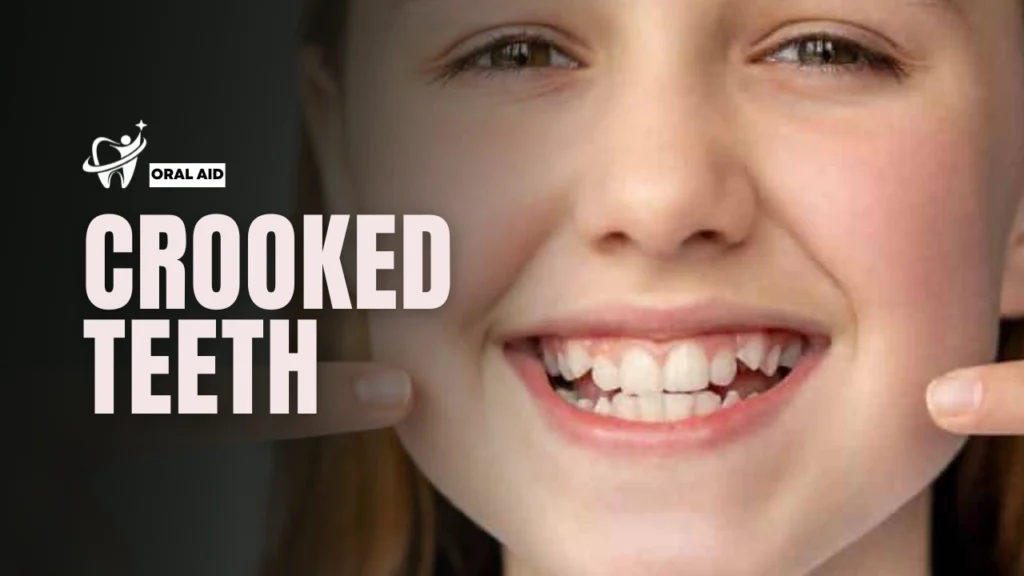
There is a particular moment that many of our patients describe in similar terms. They are looking at a photo from a birthday, a wedding, or a work event, and instead of seeing the memory, they notice their teeth. A slight overlap. A tooth that sits forward. A smile they instinctively want to crop out.
Some have felt this way for years. Others started noticing it more recently, maybe after a gap widened slightly, or a tooth that used to be straight now sits at an odd angle. A few come in assuming there is nothing to be done. “I’ve had crooked teeth since secondary school,” one patient told us, “I just assumed that was it.”
It is not. Crooked teeth are one of the most common dental concerns, and they are also one of the most treatable, whether you are 16 or 46.
This article covers what crooked teeth actually are, what causes them, why they matter beyond how they look, and what treatment looks like in Lagos.
What Are Crooked Teeth?
Crooked teeth are a general term that describes teeth that are misaligned, overlapping, crowded, or sitting out of their correct position in the jaw. In clinical terms, this is called malocclusion, which literally means “bad bite.” It refers not just to how individual teeth look, but to how the upper and lower jaws come together when you bite.
Malocclusion comes in several forms. An overbite is when the upper front teeth extend too far over the lower teeth. An underbite is the reverse, where the lower teeth sit in front of the upper teeth when the mouth is closed. A crossbite occurs when some upper teeth sit inside the lower teeth rather than outside. Crowding happens when there is not enough space in the jaw for all the teeth, causing them to overlap or rotate. An open bite is when the upper and lower front teeth do not meet at all, even when the back teeth are touching.
Most people with crooked teeth have some combination of these, rather than one isolated issue. But what led to this?
What Are The Causes of Crooked Teeth?
Crooked teeth develop when there is an imbalance between jaw structure, tooth size, and eruption timing. Several factors contribute to this, and most of them are not things you could have prevented. What often leads to crooked teeth is:
- Genetics
- Jaw size changes
- Childhood habits
- Early loss of baby tooth
- Mouth breathing
- Trauma and/or injury
Let’s look. Lovely at each one of them.
Genetics
This is the most common cause. Jaw size and tooth size are largely inherited traits. If your parents had crowded or misaligned teeth, there is a reasonable chance you or your children will face a similar pattern. You can inherit a jaw that is too small for the number of teeth you have, or teeth that are proportionally too large for your jaw, and the result is crowding.
Jaw size changes over generations
Research suggests human jaws have become smaller over generations, leaving less room for a full set of adult teeth. Dietary shifts, particularly moving away from tougher, chewier foods that exercised the jaw during childhood development, are thought to be a contributing factor. This is relevant today because it means that even in families with no obvious history of crooked teeth, misalignment is increasingly common.
Childhood habits
Prolonged thumb-sucking, pacifier use past age three, or tongue-thrusting can push teeth out of alignment during development. These habits exert consistent pressure on growing teeth and the soft, still-forming bone around them. The earlier these habits stop, the lower the impact. In many Lagos families, children use pacifiers well past the recommended age, often without awareness that it can affect dental development.
Early loss of baby teeth
When a baby tooth is lost earlier than expected, whether through decay, trauma, or extraction, the neighbouring teeth tend to drift into the space. This disrupts the path the permanent tooth needs to erupt properly, causing it to erupt at an angle or become impacted.
Mouth breathing
Children who breathe primarily through their mouths, often due to blocked nasal passages, allergies, or enlarged adenoids, develop altered jaw growth over time. The tongue, which normally rests against the roof of the mouth and helps shape the palate, drops down when the mouth is open. This affects how the upper jaw develops and can lead to a narrower palate and crowding.
Trauma and injury
A hard knock to the face or jaw, the kind that is not uncommon in contact sports, motorcycle accidents, or even childhood falls, can shift teeth or disrupt development if it happens at a critical age.
Treatment Options for Crooked Teeth in Lagos
The right treatment depends on the type and severity of misalignment, your age, whether there are any bite issues involved, and your lifestyle preferences. There is no single answer that fits everyone, and the first step is always an assessment.
The most versatile treatment for crooked teeth is the traditional metal braces. They can handle the full range of cases, from mild crowding to complex bite problems that involve significant jaw repositioning.
Another type is the ceramic braces, which work exactly like metal braces but use tooth-coloured or clear brackets that are significantly less noticeable.
Then you have the clear aligners, made of removable trays that gradually shift teeth into position. They are virtually invisible and can be taken out to eat, drink, and clean your teeth.
In some cases of severe crowding, there simply is not enough room in the jaw for all the teeth to align properly. Extraction of one or more teeth may be necessary to make room for proper alignment. This is typically done before or alongside braces treatment and is planned carefully to preserve facial balance and bite function.
For cases where the misalignment originates in the jaw structure itself rather than just the teeth, orthodontic treatment alone may not be sufficient. Jaw surgery can correct structural issues in the jaw that contribute to dental misalignment and is typically recommended in combination with braces. This is reserved for more complex presentations, including severe underbites, overbites, or facial asymmetry, and is carried out by an oral and maxillofacial surgeon.
Frequently Asked Questions
Yes. Teeth continue to move throughout life, and without treatment, crowding and misalignment can worsen gradually. Adult teeth drift particularly after the loss of a tooth nearby, changes in bite force, or the natural shifting that happens with age.
Genetics plays a significant role. Jaw size, tooth size, and the relationship between the two are inherited traits. That said, environmental factors during childhood, including habits, nutrition, and dental history, also shape how teeth develop.
Treatment length depends entirely on the severity of the case and the method chosen. Simple crowding can be resolved in as little as six to twelve months. More complex cases typically take eighteen months to two years or longer.
Ready to Fix Your Crooked Tooth?
Most people with crooked teeth already know it. What stops them is not awareness but uncertainty, about cost, about how long treatment takes, about whether it is too late, or whether it is even worth it.
The honest answer to all of those questions starts with a single assessment. At Dr. Reach Dental Clinic in Yaba and Ikeja, we evaluate your teeth, explain what is causing the misalignment, and walk you through every treatment option available to you, without pressure.
Book a consultation at www.reachdentalclinic.com.