Skip to content
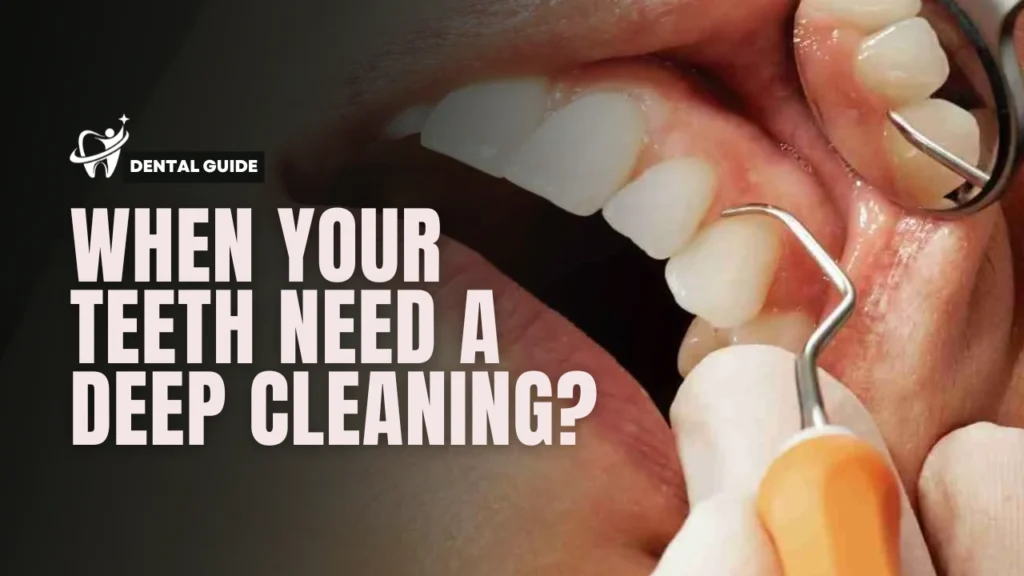
Most people in Lagos are familiar with the regular dental cleaning, a routine scale and polish that your dentist or hygienist performs to remove the visible plaque and tartar that builds up over time. But there is another, more intensive cleaning procedure that your dentist might recommend in certain situations: a dental deep cleaning.
The phrase “deep cleaning” can sound alarming if you have never heard it before. Patients often ask , does it mean my teeth are in serious trouble? Is it painful? Is it really necessary? This article answers all of that. More importantly, it will help you recognise the warning signs that your gums and teeth may need more than a standard clean , and why acting early makes all the difference.
Deep Cleaning vs Regular Cleaning: What Is the Difference?
A regular dental cleaning , also called scaling and polishing , focuses on the surfaces of your teeth that are visible above the gum line. Your dentist or hygienist uses manual or ultrasonic tools to remove plaque and hardened tartar (calculus) from the crowns of your teeth, then polishes them. This is preventative care. It removes what has accumulated since your last visit and keeps early gum problems at bay.
A deep cleaning , medically known as scaling and root planing , goes further. It is designed to treat gum disease that has already progressed below the gum line, where a regular cleaning cannot reach. The procedure involves two stages: scaling removes plaque, tartar, and bacteria from both above and below the gum line, including on the root surfaces of the teeth; root planing then smooths those root surfaces so that gum tissue can reattach and bacteria have fewer rough surfaces to cling to.
The key distinction is purpose: a regular cleaning maintains healthy gums, while a deep cleaning treats gum disease that has already taken hold.
Understanding Gum Disease: From Gingivitis to Periodontitis
To understand when a deep cleaning is necessary, it helps to understand how gum disease develops , because deep cleaning is specifically prescribed to treat its advanced stage.
Gingivitis is the earliest stage of gum disease. It is caused by plaque and tartar buildup along the gum line, which triggers inflammation. The gums become red, swollen, and bleed easily when you brush or floss. At this stage, the damage is still reversible. A standard dental cleaning, improved home hygiene, and consistent follow-up can resolve gingivitis before it advances.
When gingivitis is left untreated , which happens often, particularly when people go months or years without a dental visit , it progresses to periodontitis. This is when the infection moves below the gum line. The gums begin to pull away from the teeth, forming pockets. Bacteria colonise these pockets, infecting the ligaments and bone that hold the teeth in place. Over time, bone is destroyed, teeth become loose, and eventually, tooth loss follows.
Once periodontitis has set in, a regular cleaning is no longer sufficient. The tartar and bacteria sitting on root surfaces deep below the gum line must be physically removed , and that requires a deep cleaning.
Signs That Your Teeth May Need a Deep Cleaning
Your mouth will often give you warning signs before gum disease reaches a critical stage. Knowing what to look for could save your teeth. The following symptoms suggest your gums need professional attention , and potentially a deep cleaning:
- Bleeding gums when you brush or floss
This is one of the earliest signals that something is wrong. Healthy gums do not bleed from brushing. Persistent bleeding, especially without applying much pressure, indicates inflammation and should never be dismissed as “normal.” - Persistent bad breath that does not go away
Bad breath (halitosis) that returns even after brushing and using mouthwash is frequently caused by bacteria living in deep periodontal pockets. These bacteria release volatile sulphur compounds that no amount of mouthwash can eliminate permanently. Treatment of the underlying gum disease is the only real solution. - Sensitive teeth, especially around the gum line
As gums recede and root surfaces become exposed, the teeth become sensitive to temperature and touch. This sensitivity, particularly at the base of the teeth, is a meaningful warning sign. - Loose or shifting teeth
Teeth that feel wobbly or have shifted position , changing the way your bite feels , indicate that the underlying bone has already been compromised by infection. This is an advanced sign and requires immediate professional assessment. - Pain when chewing
Discomfort or pain when chewing can indicate deep infection around the root of a tooth, especially when gum disease has progressed to the bone. - Visible tartar buildup and dark deposits near the gum line
If you can see dark or yellowish-brown deposits at the base of your teeth near the gums, that is calcified tartar , and it almost certainly extends further below the gum line where you cannot see it.
If you are experiencing any of these symptoms, do not wait. Book a dental check-up at Dr. Reach Dental Clinic today.
The Role of Periodontal Pockets
One of the key diagnostic tools your dentist uses to determine whether a deep cleaning is needed is measuring periodontal pocket depth. Using a small probe, they measure the gap between the gum and the tooth at several points around each tooth.
In a healthy mouth, the gap between the gum and the tooth is between 1 and 3 millimetres , shallow enough that your toothbrush and floss can keep it clean. When gum disease develops, the gum separates from the tooth and the pocket deepens. Pockets of 4mm or more indicate that gum disease is present. Pockets of 5mm and above , particularly when combined with bone loss seen on an X-ray , indicate periodontitis that requires scaling and root planing.
This measurement is typically done during your routine dental check-up. It is painless, takes only a few minutes, and gives your dentist a precise picture of where your gum health stands. This is yet another reason why skipping regular dental check-ups is genuinely risky.
What Happens During a Deep Cleaning?
Understanding the procedure removes the fear around it. A deep cleaning is not as intimidating as it sounds.
Because the procedure involves working below the gum line, local anaesthetic is typically administered to numb the area being treated. Most patients report little to no discomfort during the procedure itself.
The appointment is usually divided into two sessions , upper teeth in one visit, lower teeth in another , to allow each area to be thoroughly treated. During each session, the dentist or hygienist uses manual scalers and/or ultrasonic instruments to remove tartar, plaque, and bacteria from above and below the gum line, including on the root surfaces. The root surfaces are then smoothed (planed) to discourage future bacterial adhesion and encourage the gum to reattach to the tooth.
Depending on the severity of infection, antimicrobial medication may be placed directly into the treated pockets to eliminate remaining bacteria.
The entire process typically takes between one and two hours per session.
What to Expect After a Deep Cleaning
Some post-treatment sensitivity and mild soreness is normal for a few days afterward. The gums may be slightly tender and there may be minor bleeding. This is temporary and resolves within a week in most cases.
Your dentist may recommend warm salt water rinses, an antimicrobial mouthwash, and over-the-counter anti-inflammatory medication to manage any discomfort. Cold compresses on the outside of the cheek can also help with initial swelling.
A follow-up appointment , usually four to six weeks after the deep cleaning , allows your dentist to assess how the gums are healing, re-measure pocket depths, and determine whether further treatment is needed. In many cases, gum tissue significantly improves and pockets reduce in depth as the gums reattach.
Take Control of Your Gum Health Today
If you have not had a dental check-up in the last six months, or if any of the warning signs above sound familiar, now is the time to act. Gum disease does not reverse on its own , but it is highly treatable when caught early.
Book your appointment at Dr. Reach Dental Clinic in Lagos , our team will assess your gum health, provide professional cleaning, and let you know honestly whether a deep cleaning is necessary.