Skip to content
If you or your child is currently wearing orthodontic braces and your orthodontist has just told you that it is time to add elastic bands to the treatment, you probably have questions. Why are rubber bands necessary? What exactly do they do? Does it mean the braces are not working?
Elastic band for braces, are a normal for orthodontic treatment patients. They are not a sign that something has gone wrong. They are a precision tool that allows the orthodontist to correct jaw alignment and certain tooth movements that braces alone cannot achieve. This article explains everything you need to know about rubber band braces: what they do, the different types, when they are used, how long you wear them, and how to make the most of them.
What Are Elastic Band For Braces Do?
Braces work by using archwires that run through brackets bonded to each tooth, applying continuous gentle pressure to move teeth into alignment. This system is powerful, but it has one significant limitation. It primarily moves teeth within each jaw independently. It cannot, on its own, correct the relationship between the upper jaw and the lower jaw.
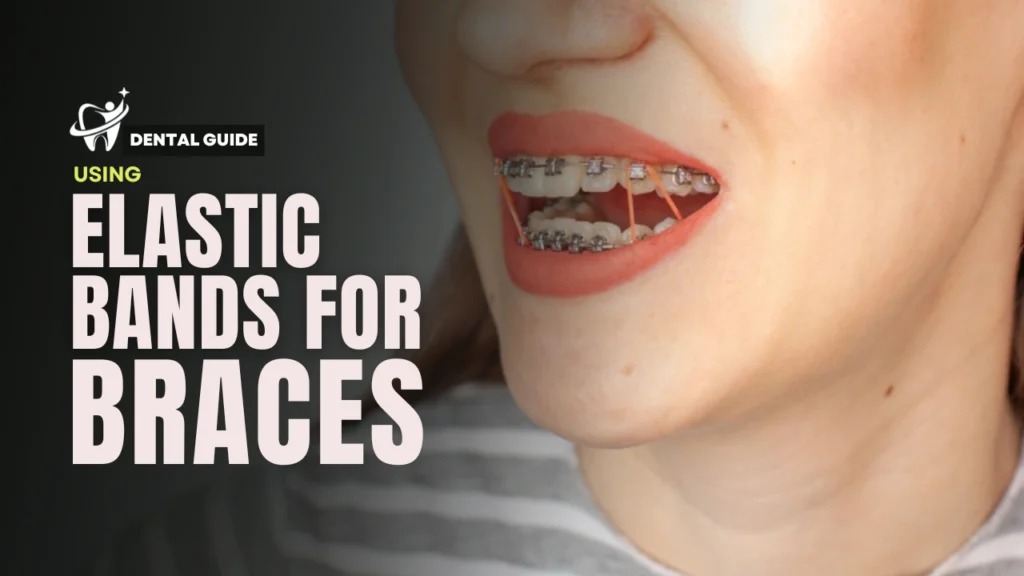
This is where elastic band for braces come in. They are small elastic loops that connect hooks on the upper brackets to hooks on the lower brackets, creating a bridge between the two jaws. This cross-jaw tension applies additional force that changes how the upper and lower jaws relate to each other.
Elastic band for braces can also be used for other applications, closing spaces between teeth, adjusting the tilt or angle of specific teeth, or fine-tuning tooth positioning in the final stages of treatment.
Types of Elastic Band Used for Braces
Elastic band for braces are categorised by how they are configured in the mouth. Your orthodontist will choose the type based on what problem needs to be corrected.
Class I elastics are positioned horizontally on the same jaw. It connects teeth on the upper jaw to other upper teeth, or lower to lower. They are most often used to close gaps and adjust tooth spacing within a single arch.
Class II elastics connect the upper front teeth (or canines) to the lower back molars. This diagonal configuration generates force that pulls the upper jaw back while bringing the lower jaw forward , used to correct overbites and cases where the upper teeth protrude excessively.
Class III elastics do the reverse. It connects the lower front teeth to the upper back molars. They pull the lower jaw backward and the upper jaw forward, used to correct underbites.
Vertical rubber band braces link the upper and lower teeth directly above and below each other on the same side. They pull the jaws together to close open bites.
Cross rubber elastics link teeth across the arch diagonally over the front teeth, used to correct crossbites.
The specific type your orthodontist prescribes may change over the course of your treatment as different corrections are made at different stages.
How Long Do Elastic Band Used for Braces Stay On?
Elastic bands lose their elasticity quickly. The tension they apply diminishes over hours, which is why most patients are instructed to change their rubber band braces every 12 to 24 hours, sometimes more frequently.
The total duration of elastic band for braces varies from patient to patient. Some people wear them for a few weeks to address a specific correction; others may wear them for several months. In cases where jaw alignment requires significant work, rubber band braces may be part of treatment for a year or more.
One critical point: elastic band used for braces only work when they are worn. Most orthodontists instruct patients to wear their rubber band braces 20 to 22 hours per day. The teeth and jaw can gradually drift back toward their original position whenever the rubber bands are not in place.
Practical Tips for Wearing Elastic Band for Braces Daily
Lagos life is busy, school, work, social engagements, events. Here is how to make elastic band braces a seamless part of your daily routine:
Always carry spares. Elastic bands snap, get lost during meals, and need daily replacement. Keep a small supply in your pocket, bag, or desk drawer at all times. Your orthodontist will provide you with extras.
Remove them before eating. Food and chewing force can cause the rubber to snap or dislodge. Always remove before meals, then replace them once you have brushed your teeth after eating.
Put them back in immediately after brushing. The most common compliance mistake is brushing, getting distracted, and forgetting to reattach the rubber bands. Make reattachment part of your immediate post-brushing routine.
Can You Eat and Sleep With Elastic Band for Braces?
For eating: remove the rubber band before meals. This protects the bands from snapping under chewing force and prevents food from getting caught in them. Brush your teeth and reattach the rubber bands promptly after eating.
For sleeping: most orthodontists instruct patients to wear rubber band braces while sleeping. The jaw is at rest and not actively chewing, which means the bands can work undisturbed for several hours. Many patients find that the initial discomfort of sleeping with rubber bands fades within a week.
How do I Care for My Teeth While Wearing Elastic Braces?
The oral hygiene demands of elastic band for braces are the same as for braces generally. Food and plaque can accumulate around brackets and elastic hooks. Brush after every meal using a soft-bristled toothbrush, angling toward the gum line and around each bracket. Floss daily using a floss threader or water flosser to clean between the teeth under the archwire.
Read our full guide on how to care for teeth braces for a complete oral hygiene routine during orthodontic treatment.
Avoid the foods that damage braces: hard candy, crunchy chin-chin, toffee, sticky sweets, and bone-in meat bitten directly. These can snap rubber bands and break brackets, both of which delay treatment progress.
What Do I Do When the Elastic Band for Braces Breaks or Falls Off?
Rubber bands can and do snap, it happens. If an elastic band for braces breaks or comes off, replace it with a new one from your supply as soon as possible. Do not wait until your next appointment. Every hour without the rubber band in place is time the jaw is not receiving the intended force.
If you notice that rubber bands are breaking frequently, mention it to your orthodontist at your next visit. It may indicate that the configuration needs adjustment or that a different size is more appropriate for your case.
Ready to Start Your Orthodontic Journey in Lagos?
Whether you are just starting to consider braces, are already in treatment and have questions about elastic braces, or want to understand more about what your child’s orthodontist is recommending, our team at Dr. Reach Dental Clinic is here to help.
Book your orthodontic consultation today and let us create a personalised treatment plan that gets you the results you deserve.