Skip to content
A patient came into our clinic recently, braces freshly removed, smile looking exactly the way she had hoped for after 18 months of treatment. She was thrilled. Then we mentioned retainers.
Her expression changed immediately. “But I’m done now, right? Why do I need something else?”
She is not alone. This happens more often than you would think, and it tells us that retainers are one of the least talked-about parts of orthodontic care, which is a problem, because they are also one of the most important. Skipping your retainer after braces or aligners is one of the fastest ways to undo everything you just paid for.
So we are setting the record straight, once and for all.
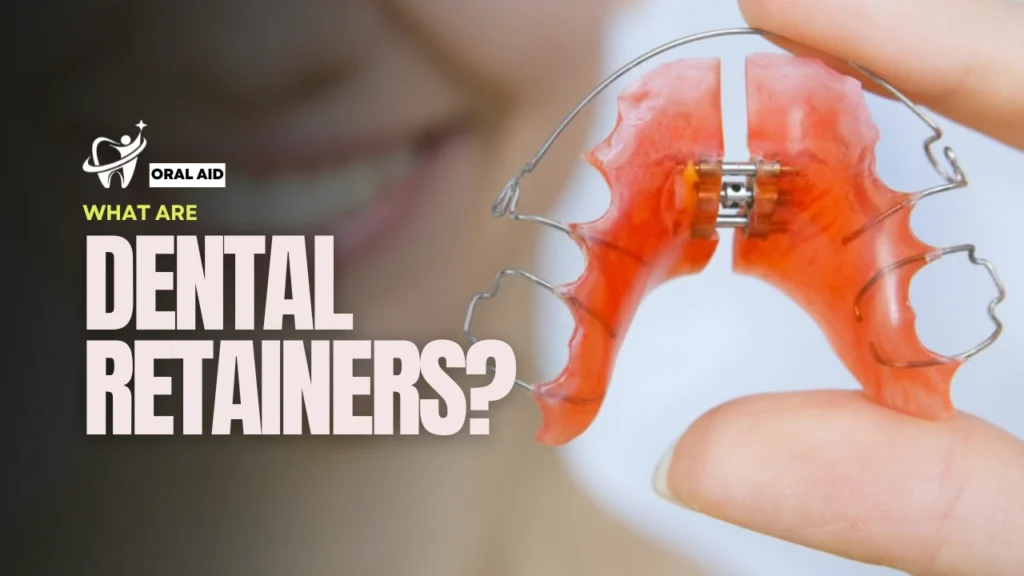
What Is a Dental Retainer?
A dental retainer is a custom-made appliance worn after orthodontic treatment to hold your teeth in their corrected positions. It does not move teeth; that job belongs to braces or aligners. What it does is prevent your teeth from drifting back once active treatment ends.
Here is why this matters: when your braces or aligners come off, the bone and connective tissue surrounding your teeth have not fully hardened into the new position yet. The teeth are stable enough to look great, but the underlying structures are still settling. During this period, and even long after, teeth have a natural tendency to migrate back toward where they were. This tendency is called relapse, and it can happen to anyone who does not wear their retainer consistently, regardless of how straightforward or complex their original case was.
Retainers exist specifically to prevent this. They are not optional, and they are not a temporary phase.
Types of Dental Retainers
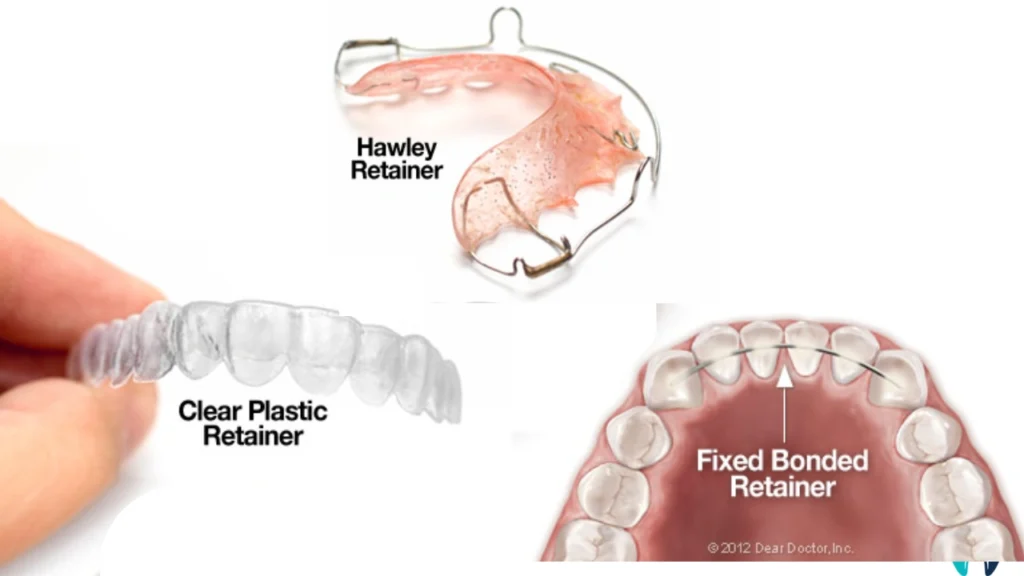
There are three main types, and the right choice depends on your case, your lifestyle, and your dentist’s recommendation after assessing how your teeth have settled.
Hawley Retainer
This is the classic design that has been around for decades. It consists of a thin stainless steel wire that crosses the front of your teeth, held in place by an acrylic base that sits against the roof of your mouth (for upper teeth) or the floor of your mouth behind the lower front teeth.
The wire is visible when you speak or smile, which some patients find unappealing. However, the Hawley retainer earns its place because of durability. With proper care, one can last five to ten years, making it the most cost-effective option over time. It can also be adjusted by your dentist if minor corrections are needed, which is not possible with clear retainers. Dentists often recommend Hawley retainers for patients who have had more complex cases, because the adjustability gives more long-term control.
Clear (Essix) Retainer
This is the type most patients leaving clear aligner treatment tend to prefer, because it looks almost identical to the aligner trays they have been wearing. It is a thin, transparent plastic tray moulded precisely to the shape of your teeth. When worn, it is nearly invisible.
The comfort and aesthetics are the main advantages. The trade-off is lifespan. Clear retainers typically last one to two years before needing replacement, especially with nightly use. They are also vulnerable to heat. Leaving a clear retainer on the dashboard of your car in Lagos sun, or rinsing it under hot water, can warp it enough to make it unwearable. Once warped, it cannot be fixed; it needs to be replaced.
Fixed (Bonded) Retainer
A fixed retainer is a thin wire permanently bonded to the inner surface of your front teeth, most commonly the lower six. You cannot remove it, and you do not need to think about it. It works around the clock without any effort on your part.
This makes it the most reliable option for patients who know, honestly, that they will not be consistent with a removable retainer. The downside is that cleaning requires more attention. You cannot floss normally; you need a floss threader or an interdental brush to clean between the teeth along the wire. Plaque buildup around a fixed retainer, if ignored, can lead to tartar, gum inflammation, and eventually problems that would require the wire to be removed. Your dentist will walk you through the cleaning technique at the fitting.
Some patients end up with both: a fixed retainer on the lower teeth for reliability and a removable clear retainer on the upper teeth for comfort.
How Long Do You Wear a Retainer?
This is where expectations and reality often diverge. For the first few months after treatment, most dentists recommend full-time wear, meaning you remove the retainer only to eat, drink anything other than water, and brush your teeth. After that window, nighttime wear is generally sufficient.
The part that surprises most patients is what comes next: you wear it for life, even if only while sleeping.
Teeth do not reach a point where they are permanently locked in place. The natural forces in your mouth, including pressure from your tongue, cheek muscles, and the simple act of chewing, continue to exert influence on tooth position for as long as you have teeth. Patients who wore retainers faithfully for two years, then stopped, often return five or ten years later to find noticeable shifting. The retainer is a long-term maintenance tool, similar to how you maintain any investment you care about.
Dental Retainer Cost in Lagos
Most dental clinics in Lagos do not publish retainer prices openly, but based on current market rates across practices in Yaba, Ikeja, Lekki, and Mushin, here is what you can reasonably expect.
Clear (Essix) retainers generally fall between ₦80,000 and ₦200,000 per arch. Hawley retainers sit in a similar bracket, sometimes slightly higher, given the materials and the clinical time involved in fitting and adjusting. Fixed bonded retainers tend to cost more, typically starting from ₦150,000 per arch and going higher depending on the clinic and the complexity of placement.
One important thing to clarify before you finish orthodontic treatment: ask whether retainers are included in your treatment quote or priced separately. Knowing this in advance helps you plan without surprises at the end of what is often a long and expensive treatment journey.
Because clear retainers need replacing every one to two years, the long-term cost of that option is higher than it appears upfront. If you are weighing retainer types partly on cost, factor in the replacement cycle.
How to Clean Your Dental Retainers at Home
How you care for your retainer directly affects how long it lasts and how safe it is to wear. A poorly cleaned retainer accumulates plaque, bacteria, and mineral deposits, which can damage your gum tissue and cause the retainer to smell or degrade faster than it should.
How to Clean Removable Retainers (Cclear or Hawley)
Rinse your retainer with cool or lukewarm water every time you take it out. This removes loose debris and saliva before it dries and hardens. Never rinse with hot water; it permanently warps clear plastic retainers. It can also affect the acrylic base of Hawley retainers. You should also clean it daily using a soft toothbrush and either a small amount of mild liquid soap or a non-abrasive, non-whitening toothpaste.
What to avoid: bleach, alcohol-based mouthwash used as a soak, and ultrasonic cleaners not recommended by your dentist. These can degrade the materials or the bonding agents over time.
When your retainer is not in your mouth, it should be in its case, not wrapped in tissue, left on the bathroom counter, or placed near food. Retainers get lost, stepped on, or thrown away this way more often than you would expect.
How to Clean Fixed (Bonded) Retainers
Daily brushing along the wire with a soft toothbrush is essential. Use an interdental brush or a floss threader to clean between each tooth along the wire. This is the area most prone to plaque and tartar accumulation, and neglecting it is what causes most complications with fixed retainers. Your dentist should also check the wire at your routine appointments to ensure the bonding material is intact and the wire has not shifted.
Signs Your Dental Retainer Needs Replacing
Knowing when to replace a retainer is as important as wearing one consistently. A retainer that no longer fits properly is not doing its job, and forcing an old one back in after a long break can actually damage your teeth.
Replace your retainer if:
- It feels noticeably looser or tighter than when it was first fitted,
- It has cracks or visible damage, if it has warped from heat exposure, or
- It smells persistently despite regular cleaning.
If you have gone a few weeks without wearing your removable retainer and it no longer sits, do not try to force it in. Book an appointment first so your dentist can assess whether your teeth have moved and what the next step should be.
Frequently Asked Questions
They look similar but serve entirely different purposes. A mouthguard protects teeth from impact during contact sports or prevents damage from grinding during sleep. A retainer maintains tooth position after orthodontic treatment. One is protective; the other is corrective maintenance. They are not interchangeable.
Only if it is a fixed retainer, where you have no choice. Removable retainers, whether clear or Hawley, should always come out before eating or drinking anything other than plain water.
It means your teeth have begun to shift, even slightly. Mild tightness that resolves quickly is usually not serious. If the retainer feels significantly difficult to seat or causes pain, do not force it. See your dentist to assess whether movement has occurred and whether your current retainer can still do its job.
Your Treatment Does Not End When the Braces Come Off
That patient who came in, relieved and smiling, left with a clear retainer and a much better understanding of what comes next. Six months later, her teeth were exactly where we left them.
That is what a retainer does. It is a part of the treatment that protects everything that came before it.
If you recently completed orthodontic treatment or you are planning to start and want to understand the full process from start to finish, we are happy to walk you through it. Book a consultation at Reach Dental Clinic in Yaba or Ikeja at www.reachdentalclinic.com.