Skip to content
If you have ever looked at someone with a mouth full of shiny brackets and wires and wondered what exactly is going on, this article is for you. Metal braces are the most widely used orthodontic treatment in the world, with decades of clinical evidence behind them and a proven track record of delivering straight, well-aligned smiles for children, teenagers, and adults alike.
But metal braces are often misunderstood. Many people associate them only with teenagers or assume they are outdated now that clear aligners exist. Neither is true. Metal braces remain the most effective, most versatile, and most accessible option for correcting a wide range of dental and bite problems, and at Dr. Reach Dental Clinic in Lagos, they continue to transform smiles every day.
Here is everything you need to know about metal braces before making a decision.

What Are Metal Braces?
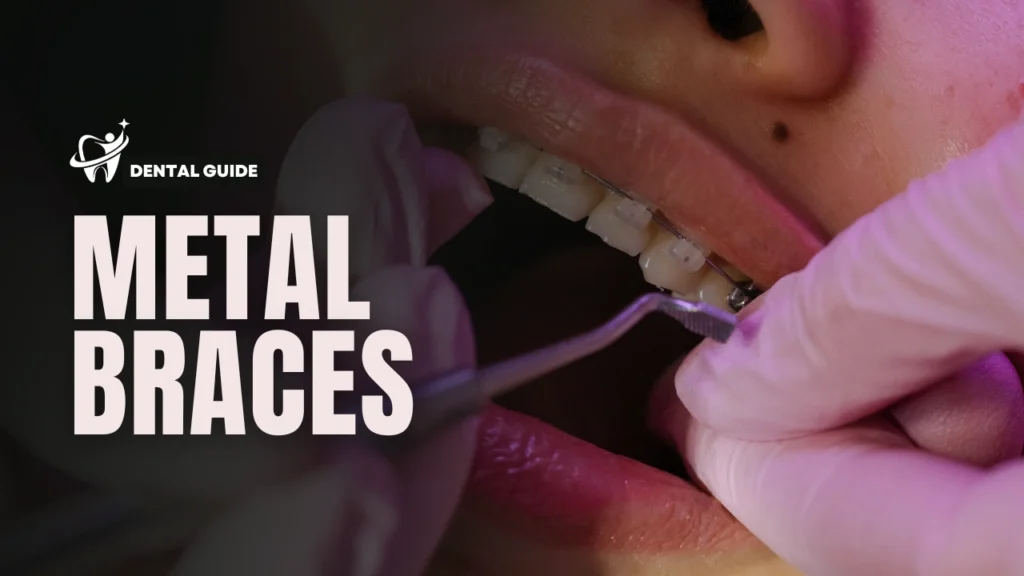
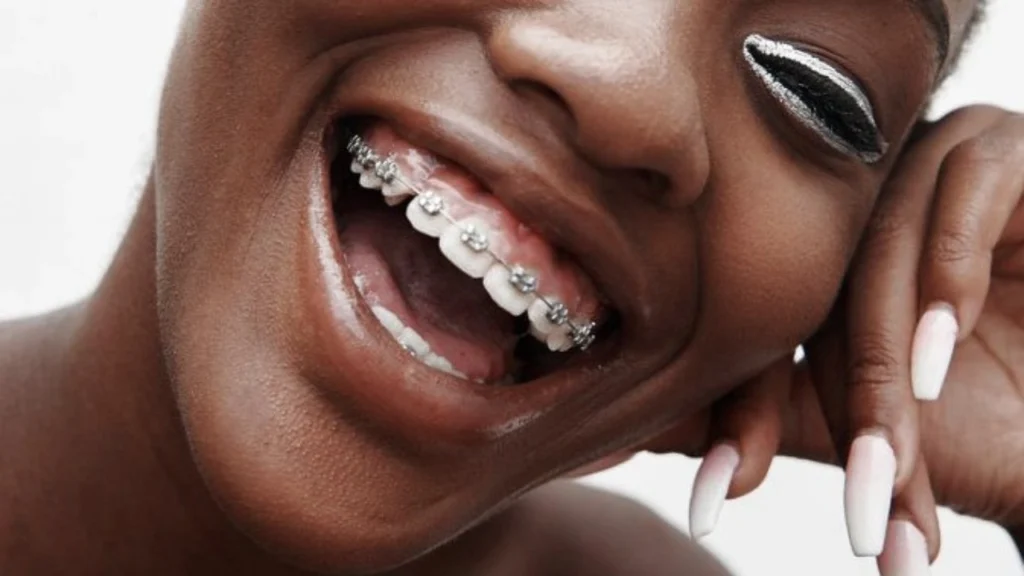
Metal braces are a fixed orthodontic appliance used to move teeth into correct alignment over time. They consist of three main components working together as a system:
Brackets: Small square or rectangular metal pieces bonded directly to the front surface of each tooth using a special dental adhesive. Each bracket has a slot through which the archwire runs.
Archwire: A thin, flexible wire that threads through the slot in each bracket across the entire arch of teeth. The archwire is the engine of the system; it exerts the constant, controlled pressure that causes teeth to move.
Ligatures: Tiny elastic bands (also called o-rings) that wrap around each bracket to hold the archwire in place. These are available in a range of colours, which is why so many younger patients enjoy the aesthetic element of metal braces.

Some metal braces also use molar bands, metal rings cemented around the back molars to provide strong anchor points for the system. In certain treatment plans, hooks on the brackets are used to attach rubber band elastics that correct the relationship between the upper and lower jaws.
Together, this system works as a single coordinated mechanism: the archwire applies force, the brackets transmit that force to individual teeth, and the teeth respond by gradually shifting through the surrounding bone tissue into new positions.
How Do Metal Braces Work?
The mechanics of metal braces are rooted in a biological process called bone remodelling. Teeth are not rigidly fixed in the jawbone; they sit in a socket lined with a periodontal ligament, a dense network of fibres connecting the tooth root to the surrounding bone. When gentle, sustained pressure is applied to a tooth, the ligament fibres on the pressure side trigger bone cells called osteoclasts to break down bone tissue, while new bone is formed on the tension side behind the moving tooth. This allows the tooth to migrate through the jaw without being damaged.
Metal braces apply this pressure in a continuous, controlled manner. The archwire, placed under tension through the bracket slots, is always trying to return to its original shape. In doing so, it pulls each tooth toward the intended position. As teeth move, the archwire is periodically replaced with progressively firmer wires that apply force to continue the movement.
This is why adjustment appointments are so important. At each visit, typically every 6 to 10 weeks, the orthodontist evaluates progress, replaces or adjusts the archwire, and makes any corrections to the treatment plan. Each adjustment represents the next phase of tooth movement. Missing appointments means the process stalls.
Types of Metal Braces
Not all metal braces are the same. There are two main types, conventional and self-ligating. Your orthodontist will recommend the one that best suits your case.
Conventional Metal Braces
This is the standard, time-tested system described above, brackets bonded to each tooth, with the archwire held in place by coloured ligature bands. Conventional metal braces are highly effective, durable, and suitable for virtually all orthodontic cases, including severe crowding, significant bite problems, and complex tooth rotations. They are also the most cost-accessible option.
The coloured ligatures are replaced at each appointment, which gives patients (especially children and teenagers) the chance to customise their look with different colour combinations.
Self-Ligating Metal Braces
Self-ligating metal braces are a more advanced version of the conventional system. Instead of elastic ligature bands, the brackets themselves have a built-in sliding or locking mechanism that holds the archwire in place.
This design reduces friction between the wire and the bracket, which allows teeth to move more efficiently. Many orthodontists find that self-ligating braces require fewer adjustment appointments, cause less friction-related discomfort, and may slightly reduce overall treatment time in certain cases. They are also easier to clean because there are no ligature bands for food and plaque to collect around.
Self-ligating metal braces cost slightly more than conventional ones, but many patients find the benefits worthwhile.
What Problems Do Metal Braces Correct?
Metal braces are one of the most versatile orthodontic tools available. They can effectively treat:
Crowded teeth: When there is insufficient space in the jaw for all the teeth to sit properly, they overlap and rotate. Metal braces apply the precise individual force needed to create space and align each tooth.
Gapped teeth (diastema): Spaces between teeth, including the common gap between the upper front teeth, can be closed with metal braces.
Overbite: When the upper front teeth overlap the lower front teeth excessively. Metal braces, often in combination with rubber band elastics, correct this bite discrepancy.
Underbite: When the lower jaw sits further forward than the upper jaw. Metal braces address the tooth and jaw positioning involved.
Crossbite: When some upper teeth sit inside the lower teeth instead of outside them, causing the jaw to shift sideways. Metal braces can correct this with or without additional appliances.
Open bite: When the upper and lower front teeth do not meet when the mouth is closed. Often treated with metal braces and vertical elastics.
Protruding teeth: Teeth that angle outward from the arch are both an aesthetic and functional concern. Metal braces retract them into proper alignment.
In short, metal braces can handle mild, moderate, and complex orthodontic cases, which is precisely why they remain the treatment of choice for the most demanding alignment problems.
Pros and Cons of Metal Braces
Metal braces have been the standard of orthodontic care for over a century because they genuinely work. But like every treatment, they come with trade-offs worth understanding.
Advantages of metal braces:
Metal braces are the most effective option for treating complex and severe orthodontic cases, crowding, rotations, and significant bite problems that clear aligners cannot reliably address. They are durable, resistant to breakage, and do not rely on patient compliance beyond keeping appointments (unlike aligners, which must be worn 20 to 22 hours daily to be effective).
Metal braces also work around the clock, every hour of every day, whether the patient remembers to put something in or not. They are also the most cost-accessible orthodontic option, making them attainable for a wide range of patients in Lagos. And for children and younger teenagers, the coloured ligatures make the experience more engaging.
Disadvantages of metal braces:
Metal braces are visible; there is no disguising them. For some adults, this is a significant consideration. They require dietary restrictions throughout treatment: hard, sticky, and crunchy foods must be avoided to protect the brackets and wires.
Oral hygiene takes more effort with metal braces, as brackets and wires create many small spaces where plaque and food debris accumulate. Some initial discomfort after fitting and after each adjustment is normal, though it is temporary and manageable.
Foods to Avoid With Metal Braces
The dietary rules for metal braces are straightforward: avoid anything hard, sticky, crunchy, or chewy enough to dislodge a bracket or bend a wire. In Lagos, this specifically means:
Avoid hard candy, crunchy chin-chin, popcorn, hard biscuits, toffee, caramel, chewing gum, and meat bitten directly from the bone. Corn should be cut off the cob rather than bitten whole. Hard fruits like apples should be sliced rather than bitten. Suya is fine, opt for the softer, well-cooked pieces and chew gently.
Soft, well-cooked foods are safe throughout metal braces treatment: rice, beans, soft plantain, soups, stews, pasta, eggs, soft fish, and fruits cut into small pieces.
Read our full guide on foods to avoid for good oral health to understand how diet affects your teeth both during and after orthodontic treatment.
How do I Care for My Metal Braces?
Good oral hygiene with metal braces requires more attention than usual, but the routine is learnable and becomes second nature within a few weeks.
Brush using a soft-bristle toothbrush and fluoride toothpaste. Angle the brush at 45 degrees toward the gum line and brush along the top and bottom of each bracket row. An interproximal brush helps clean between brackets and under the archwire, where your regular toothbrush cannot reach.
Floss at least once daily using a floss threader to guide the floss under the archwire and between each pair of teeth. A water flosser is an excellent alternative; it flushes debris from between teeth and around brackets with a pressurised water stream.
Our complete guide on how to care for teeth braces covers the full oral hygiene routine in detail.
How Long Do Metal Braces Take?
Treatment duration varies depending on the complexity of the case. On average, metal braces treatment takes between 12 and 24 months. Mild cases may be complete in under a year. Complex cases involving significant bite correction can take two to three years.
Several factors influence how quickly treatment progresses: how well the patient follows the orthodontist’s instructions, whether they keep all their adjustment appointments, whether elastics (rubber bands) are worn as prescribed, and the individual biology of their bone remodelling response.
The single most reliable way to keep treatment on track and on time is to attend every scheduled appointment without delay.
Metal Braces vs Other Options: Which Is Right for You?
The choice between metal braces and other orthodontic options depends on your specific clinical needs, lifestyle, and budget. Here is a brief, honest comparison:
Metal braces vs ceramic braces: Ceramic braces use tooth-coloured brackets that are far less visible. They work the same way as metal braces and are similarly effective, but are more fragile, more expensive, and more prone to staining. For patients whose primary concern is aesthetics, ceramic braces offer a discreet alternative, though metal braces remain superior for complex cases due to their durability.
Metal braces vs clear aligners: Clear aligners (such as Invisalign) are removable, nearly invisible, and do not restrict diet. However, their effectiveness is most reliable for mild to moderate cases. They depend entirely on patient compliance; if the aligners are not worn as prescribed, treatment stalls. For teenagers and adults who may struggle with that compliance, or for cases requiring complex tooth movements, metal braces deliver more predictable results.
Metal braces vs lingual braces: Lingual braces are placed on the inside surfaces of the teeth, making them invisible from the front. They are significantly more expensive, more difficult to adjust, and can cause more tongue discomfort. They are not widely available in Lagos.
For many patients in Lagos, especially those with moderate to severe crowding, bite issues, or complex tooth movements, metal braces remain the most reliable, most cost-effective, and most accessible choice.
Metal Braces in Lagos: Start Your Journey at Dr. Reach Dental Clinic
Dr. Reach Dental Clinic provides orthodontic braces for adults and teenagers at our Lagos clinic. Our orthodontist will assess your teeth thoroughly, explain your options honestly, and design a personalised treatment plan that gets you the smile you want.
There is never a wrong time to start. Many of our adult patients tell us they wish they had done it sooner.
Book your orthodontic consultation today, and take the first step toward a confident, well-aligned smile.
Frequently Asked Questions About Metal Braces
There is some discomfort for the first few days after fitting and after each adjustment appointment as the teeth respond to new pressure. This is temporary and manageable with warm salt water rinses, soft food, and paracetamol if needed. The braces should not cause persistent pain; if they do, contact your orthodontist.
Yes, but wear an orthodontic mouthguard during any contact sport. A blow to the mouth without protection can break brackets and injure the soft tissues of the lips and cheeks.
There may be a very slight adjustment period in the first week, but metal braces, unlike lingual braces, do not significantly affect speech for most patients. Any change resolves quickly as the tongue adapts.
Metal braces cost between ₦750,000 and upward. The exact cost depends on the complexity of your case and the expected treatment duration.