Skip to content
Every Lagos person knows the joy of cold Fanta on a hot afternoon, the crunch of crunchy puff-puff at a party, or the sticky sweetness of toffee candy. But here is the truth your teeth have been trying to tell you: the things you eat and drink every day are either building your oral health or quietly destroying it.
You can brush twice a day and still end up with cavities, gum disease, and tooth decay if your diet is against your dental hygiene. The mouth is the entry point for everything that enters your body, and the bacteria living in it feed on exactly the foods you eat most.
This article breaks down the top foods and drinks that cause the most damage to your teeth, how they do it, and what smarter choices look like.
How Food Damages Your Teeth: The Science Behind It
Before we get into the list, it helps to understand what happens when food harms your teeth. Your mouth is home to millions of bacteria. When you eat foods high in sugar or starch, those bacteria feed on the sugars and release acids as a by-product. Those acids attack your tooth enamel (the hard outer layer of your teeth).
Every time this happens, your enamel weakens slightly. Over time, this erosion creates cavities. If plaque is not removed by brushing and flossing, it hardens into tartar, which triggers gum inflammation and, eventually, gum disease.
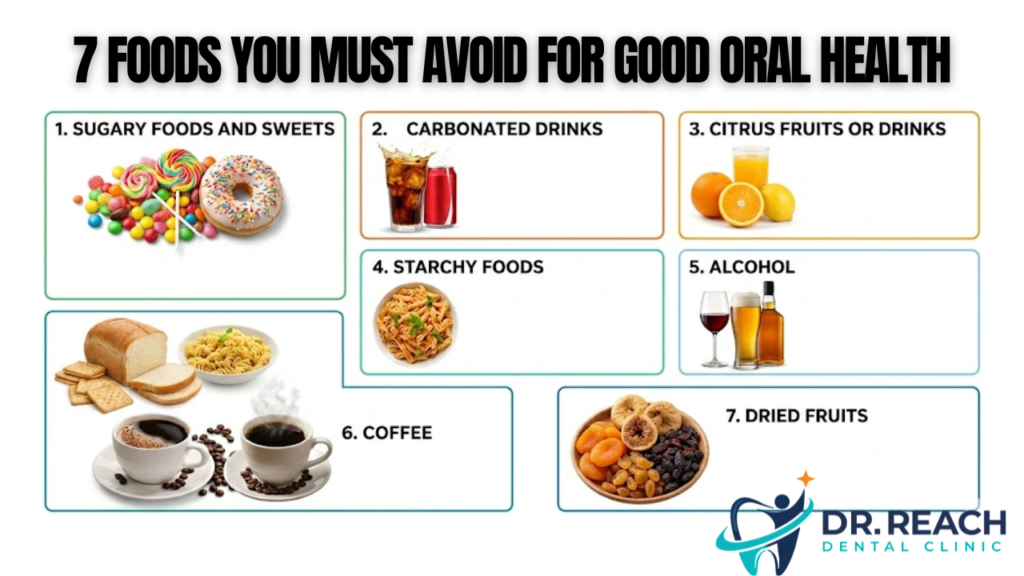
The foods listed below are most likely to accelerate damage to your teeth:
- Sugary foods and sweet
- Carbonated drinks
- Citrus fruits or drinks
- Starchy foods
- Alcohol
- Coffee
- Dried fruits
1. Sugary Foods and Sweets
Candy, chin-chin coated in sugar, biscuits, cakes, and confectionery top the list of oral health enemies. Sugar is the primary fuel for acid-producing bacteria in the mouth.
What makes hard candy and toffees especially dangerous is how long they stay in the mouth. The longer sugar sits in contact with your teeth, the longer the acid attack lasts. Sticky sweets, caramel, and chewing gum with sugar are the worst offenders. This is because they cling to the surfaces and grooves of teeth even after you have finished eating them.
If you eat sweets, rinse your mouth with water immediately afterward. And choose chocolate over sticky or hard candy when you must indulge, as it washes away from the teeth more easily.
2. Carbonated Drinks and Soft Drinks
This includes Coca-Cola, Pepsi, Fanta, Sprite, energy drinks like Predator and Monster, and even “diet” versions of these beverages. Carbonated drinks are acidic; their pH can be as low as 2.5, while enamel begins to erode at pH 5.5. Every sip bathes your teeth in acid.
Beyond the acid, most soft drinks are loaded with sugar. The combination of sugar and acid makes them one of the most destructive things you can regularly put in your mouth. Studies have found that heavy soda consumption causes enamel erosion comparable to damage from illicit substance use.
If you drink soda, use a straw to reduce direct contact with your teeth. Never sip it slowly over long periods. Rinse with water afterward, and never brush immediately after; wait at least 30 minutes, because brushing acidic enamel while it is softened causes more harm.
3. Citrus Fruits and Juices
Orange, lemon, lime, grapefruit, and pineapple are all naturally acidic. Fresh fruit juice seems like the healthy option, but the acid in citrus erodes enamel with repeated exposure. This is not a reason to stop eating fruit, but it is a reason to be mindful of how often you do, and what you do afterward.
Squeezing lemon into everything, your water, your pepper soup, your tea, adds up over the course of the day. Drinking large glasses of orange juice on an empty stomach, or sipping juice throughout the day, creates sustained acid exposure that takes a toll on enamel over months and years.
Eat citrus at mealtimes rather than between meals. Rinse with plain water after eating or drinking anything citrusy.
4. Starchy Foods
Bread, white rice, eba, fufu, potato chips, and crackers are all high in refined starch. Here is what most people do not know: starch converts to sugar in the mouth almost immediately. Your saliva contains an enzyme called amylase that begins breaking down starches the moment food touches your tongue.
The result is a sticky, paste-like substance that gets lodged in the crevices between your teeth and under the gum line, providing a slow, sustained food supply for bacteria.
Whole-grain alternatives like brown rice or whole wheat bread break down more slowly and contain less accessible sugar. When you eat starchy foods, drinking water with the meal helps wash debris away, and flossing afterward is important.
5. Alcohol
Some of you don’t want to hear about this, but it’s my job to tell you. The truth is, alcohol dries out the mouth significantly. Saliva is your mouth’s natural defence; it washes away food particles and carries minerals that help remineralise enamel. When you drink alcohol, saliva production drops, leaving bacteria to do far more damage than they normally would.
Red wine and dark spirits also stain teeth over time. Beer, though lower in alcohol, is still acidic. And sugary cocktails, malt, palm wine, etc, combine the problems of sugar and alcohol simultaneously.
What do you now do? Drinking water between alcoholic drinks reduces the drying effect. Using fluoride mouthwash before bed on evenings you drink helps compensate for reduced saliva protection.
6. Coffee and Tea (With Sugar)
Coffee and tea are both mildly acidic, and both stain enamel with regular use. But the real problem in Nigeria is that many people take their tea or coffee with two, three, or more teaspoons of sugar, and sip it slowly over 30 to 60 minutes. This creates a prolonged acid attack that repeats multiple times a day.
Switching to unsweetened versions and drinking them within a short window rather than sipping slowly reduces the damage considerably.
7. Dried Fruits
Raisins, dried dates, prunes, and other dried fruits are sticky and high in concentrated sugar. They cling to teeth the way toffee does and are not washed away easily by saliva. Many people assume dried fruit is a healthy snack, and compared to candy, nutritionally it can be, but the dental risk is real.
Fresh fruit is always the better choice. If you eat dried fruit, rinse well and floss afterward.
What to Eat Instead: Foods That Support Oral Health
The goal is not to make eating miserable. It is to make smart swaps. Foods that are good for your teeth include:
- Water and unsweetened dairy (milk, yoghurt) hydrating and mineral-rich
- Crunchy vegetables like raw cucumber, carrots (eaten whole, not chewed with compromised teeth), stimulate saliva
- Leafy greens, high in calcium and folic acid
- Nuts and seeds (in moderation), provide minerals without high sugar
- Cheese raises pH in the mouth and stimulates saliva
Timing matters too. Eating sugary or acidic foods as part of a full meal is far less damaging than eating them as snacks between meals, because saliva production during meals helps neutralise acids.
Your Mouth Needs More Than Brushing
Even the cleanest diet benefits from professional support. A dental check-up every six months allows our team to catch early signs of enamel erosion, cavities, and gum disease before they become expensive problems. Most damage that begins with diet is fully reversible in its early stages, and completely preventable with the right care.
Book your dental check-up at Dr. Reach Dental Clinic today, before a food habit becomes a dental problem.
Frequently Asked Questions
Pineapple is acidic and can erode enamel with very frequent consumption. Eating it at mealtimes rather than as a standalone snack and rinsing with water afterward reduces the risk significantly.
Plain coconut water has a mildly acidic pH but is far less damaging than carbonated drinks or juices. It is a much better choice than soda.
Once enamel is lost, it cannot regenerate, but early-stage erosion can be slowed or halted with fluoride treatments, diet changes, and professional dental care. Read our article on how to remove tartar and protect your enamel for more.