Skip to content
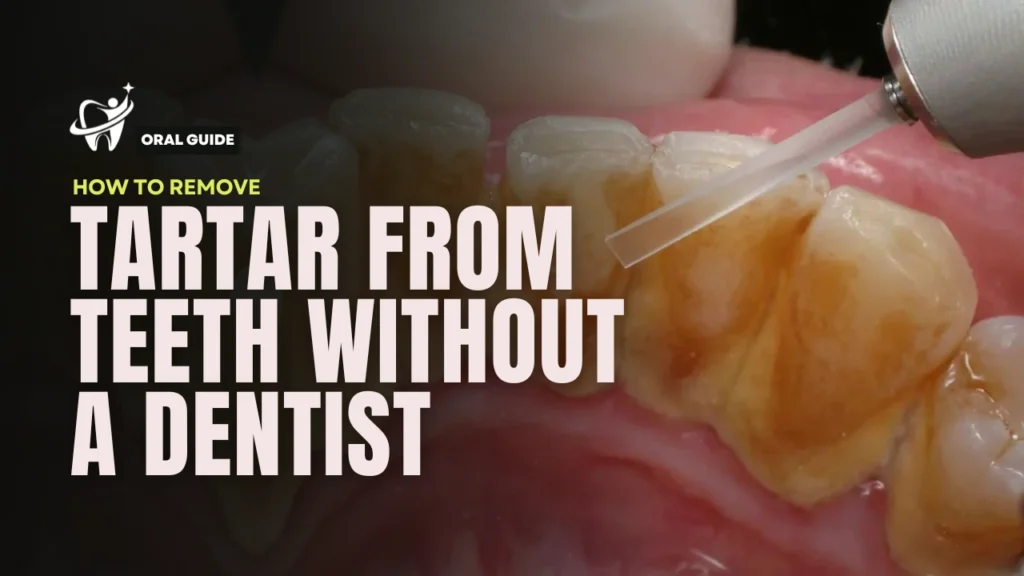
Tartar is one of those dental problems that sneaks up on you. It starts as plaque, that soft, sticky film that coats your teeth after eating. If plaque is not brushed away consistently, it absorbs minerals from your saliva and hardens into tartar, a rough, stubborn deposit that clings to the tooth surface and along the gum line.
Here is the professional truth: once tartar has fully formed, you cannot remove it at home. No toothbrush, oil, or baking soda paste will dissolve hardened calculus. Only a dental professional using specialised instruments can do that safely. What you can do at home is slow its formation, reduce buildup, and keep your mouth in a condition where tartar has less opportunity to develop. That is what this article covers. Let’s go.
Why Tartar Forms in the First Place
Plaque develops on teeth within hours of eating, particularly after sugary or starchy foods. Once hardened, tartar has a rough, porous surface that makes it easier for more plaque to stick, creating a cycle that worsens over time. When left unchecked, it contributes directly to gum disease and accelerates tooth decay, which may eventually require dental fillings or more involved treatment.
What You Can Actually Do at Home
To reduce the build-up of plaque and its hardening, there are 7 things you can do at home:
- Brush with a Tartar-Control Toothpaste
- Floss Every Day
- Use an Antiseptic Mouthwash
- Baking Soda and What It Can Realistically Do
- Reduce Sugary and Starchy Foods
- Stay Hydrated
1. Brush with a Tartar-Control Toothpaste
Tartar-control toothpastes contain compounds like pyrophosphates and zinc citrate that interfere with the mineralisation process. They do not remove existing tartar, but when used consistently, they slow down how quickly new deposits form.
Brush for two full minutes, twice a day. Use a soft-bristled toothbrush and pay particular attention to the gumline and the inner surfaces of the lower front teeth, which is where tartar tends to accumulate fastest. Electric toothbrushes generally outperform manual ones for plaque removal, making them worth the investment.
2. Floss Every Day
This is one of the natural ways to avoid tartar buildup. Tartar commonly forms in the spaces between teeth where a toothbrush simply cannot reach. Daily flossing disrupts the plaque that collects in these areas before it has a chance to harden. Many people skip this step entirely, which is one of the main reasons interdental tartar builds up faster than expected.
If traditional floss is uncomfortable, interdental brushes or water flossers are effective alternatives that achieve the same goal.
3. Use an Antiseptic Mouthwash
An antiseptic mouthwash containing chlorhexidine or cetylpyridinium chloride reduces the bacterial population in the mouth, which limits plaque activity. This does not replace brushing or flossing, but it adds a useful extra layer of protection, especially when used after meals when brushing is not always practical. This is scientifically proven.
4. Baking Soda and What It Can Realistically Do
Baking soda is mildly abrasive and has a long history of use in oral care. It can help scrub away soft plaque before it hardens, and it creates an alkaline environment that is less hospitable to the bacteria involved in plaque formation.
A small amount applied to a wet toothbrush two to three times per week can be helpful. It will not dislodge tartar that has already calcified, but it helps prevent new buildup and reduces surface staining at the same time.
PS: Do not use it more frequently than this, as excessive abrasion can wear down enamel over time.
5. Reduce Sugary and Starchy Foods
This can be hard for many Lagosians, with many Owanbe to always attend. But know that every time you eat sugar or refined carbohydrates, oral bacteria feed on those sugars. After feeding on it, they produce acid as a byproduct.
This acid softens enamel and accelerates plaque formation. Reducing snack frequency and rinsing with water after eating limits this exposure significantly.
6. Stay Hydrated
Most importantly, stay hydrated to prevent tartar buildup! Saliva is the mouth’s natural defence mechanism. It neutralises acid, washes away food particles, and contains minerals that help remineralise enamel. Chronic dehydration reduces saliva flow, which allows plaque to accumulate more easily.
Drinking enough water throughout the day, particularly plain water rather than sweetened beverages, supports healthy saliva production and keeps the oral environment more hostile to plaque formation.
Home Remedies That Do Not Work as Well as Claimed
Several popular recommendations circulate online that deserve a more realistic assessment.
Hydrogen peroxide rinses can whiten teeth and have mild antimicrobial effects, but they do not dissolve or remove tartar deposits.
Vinegar and lemon juice are sometimes suggested as tartar removers because of their acidity. This is counterproductive. Acidic solutions weaken enamel, and using them regularly causes more harm than good.
Scraping at home with metal tools is dangerous and should not be attempted. The instruments used by dental professionals during professional scaling and polishing are precision tools used with clinical training. Attempting to mimic this at home risks cutting the gum tissue, damaging enamel, and introducing bacteria into the gum line.
When Only a Professional Clean Will Do
If tartar has already built up on your teeth, you will need a professional scaling and polishing to have it safely removed. This is one of the most routine procedures in general dentistry, completed in a single visit, and entirely non-invasive for most patients.
During the procedure, an ultrasonic scaler or hand instruments are used to break up and lift tartar from the tooth surface and beneath the gum line. The teeth are then polished to smooth the surface and remove staining, making it harder for plaque to adhere afterward.
For patients with significant tartar accumulation below the gum line, a deeper cleaning called root planing may be required, which is addressed as part of gum disease treatment.
Most dental professionals recommend a dental check-up and a professional cleaning every six months. For people prone to faster tartar buildup, more frequent visits may be advised.
How Untreated Tartar Affects Your Teeth Over Time
Tartar that is left in place does not stay harmless. The bacteria embedded in tartar continuously produce toxins that inflame and break down gum tissue. This leads to bleeding gums, persistent bad breath, gum recession, and eventually bone loss around the tooth roots.
At that stage, simple scaling is no longer enough. Treatment may involve root canal procedures for teeth where infection has reached the nerve, teeth extraction for teeth that cannot be saved, or, in more complex cases, full mouth rehabilitation.
None of that is inevitable. Consistent home care combined with regular professional cleaning keeps teeth in good condition with minimal intervention needed.